
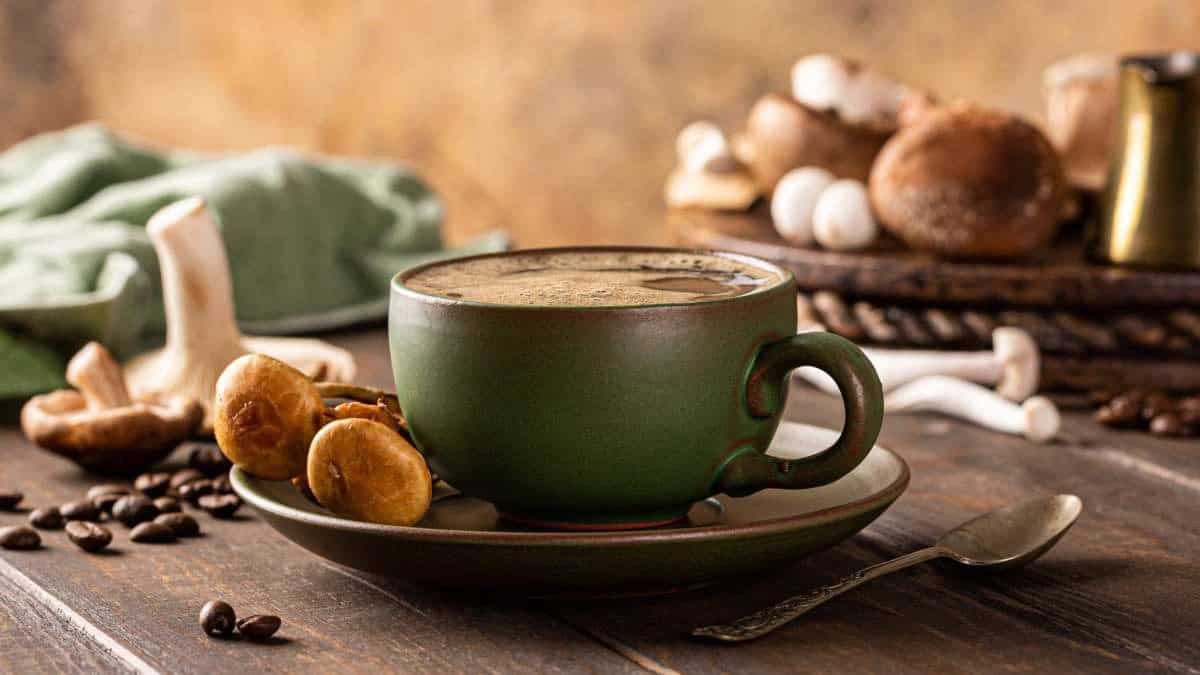
You might wonder what mushroom coffee actually is. The drink combines coffee with medicinal mushroom extracts – not your regular cooking mushrooms like shiitake or portobello. The blend uses varieties like Chaga, Lion’s mane, Reishi, Turkey tail, and Cordyceps. The concept makes sense: pack the health benefits of these medicinal fungi into a tasty coffee drink.
People who love mushroom coffee talk about better sleep, more energy, improved focus, stronger immunity, and less inflammation. But we need to separate marketing hype from what science actually proves. A recent review in the journal Molecules shows that medicinal mushrooms in these coffee blends can boost immunity and help regulate metabolism.
The drink offers one clear advantage – it has half the caffeine of regular coffee. This makes it perfect for people who are sensitive to caffeine. But there’s a catch – you’ll pay about twice as much as regular coffee.
What is mushroom coffee and how is it made?
The name mushroom coffee might make you think of mushrooms floating in your cup, but that’s not the case at all. This drink blends ground coffee beans with powdered medicinal mushroom extracts. The beverage has become a prominent player in the functional drink market and provides health benefits beyond your regular cup of joe.
Types of mushrooms used in mushroom coffee
Here are the most common types and their suggested benefits:
- Lion’s Mane: Helps with cognitive function and boosts focus
- Chaga: Packed with antioxidants and supports immune health
- Reishi: Reduces stress and benefits immune system
- Cordyceps: Boosts energy levels and stamina
- Turkey Tail: Benefits gut health and immune function
What does mushroom coffee taste like?
Most coffee lovers describe mushroom coffee’s taste as nutty and earthy with a smoother finish than regular coffee. The mushroom extracts help balance coffee’s natural bitterness and acidity. Each mushroom variety adds its own unique flavor – Chaga tastes like in regular coffee, Lion’s Mane adds a mild neutral taste, while Cordyceps brings a slight sweetness with umami notes. You can try it easily.
Does mushroom coffee have caffeine in it?
Mushroom coffee contains caffeine, but nowhere near the amount in regular coffee. The mushroom powder cuts the caffeine content roughly in half. And, there are “mushroom coffees” with decaffeinated coffee or with no coffee – just mushrooms.
Science-backed benefits of mushroom coffee
The science behind mushroom coffee shows some exciting health benefits, though researchers need more human clinical trials to confirm them. Each type of medicinal mushroom brings its own special properties that work together with coffee to support our health in different ways.
Immune system support from turkey tail and chaga
Turkey tail and chaga mushrooms contain beta-glucans that boost immune function by activating white blood cells. A 2023 review found that chaga is great for overall health, and it might work as an antimicrobial, anti-inflammatory, anticancer, and antioxidant agent [4]. On top of that, it turns out turkey tail extract helped increase natural killer cell activity in women with breast cancer, based on a 2012 study [7].
Stress reduction through adaptogens like reishi
Reishi mushrooms work as adaptogens that help your body handle stress by regulating cortisol levels [4]. This helps you feel more relaxed and emotionally balanced. One study showed that reishi supplements helped cancer patients feel less tired, anxious, and depressed [8]. We noticed that reishi creates a balanced energy boost instead of the jittery feeling you might get from coffee alone [9].
Cognitive support from lion’s mane
Lion’s mane has two unique compounds—hericenones and erinacines—that get your body to produce nerve growth factor [10]. These compounds help brain cells grow and stay healthy, which could boost your memory and thinking skills. A 2020 study showed that people with mild Alzheimer’s disease who took 1 gram of lion’s mane daily for 49 weeks did substantially better on cognitive tests [10].
Anti-inflammatory and antioxidant effects
Medicinal mushrooms in mushroom coffee are packed with polyphenols and other antioxidants that curb oxidative stress and reduce inflammation [4]. Chaga extracts can lower inflammation by blocking pro-inflammatory cytokines [7]. These anti-inflammatory properties might help people who deal with chronic inflammation.
Research suggests that reishi extracts might help lower blood cholesterol levels and reduce heart disease risk [11]. Lion’s mane extract seems to help with fat metabolism and can lower triglyceride levels [10]. Japan has already approved turkey tail’s PSK (Polysaccharide-K) as a complementary cancer treatment [6]. Studies indicate it might help fix immune cell damage from chemotherapy [6].
Caffeine content and who should consider it
Mushroom coffee serves as a perfect middle ground between regular coffee and decaf options if you need to watch your caffeine intake. The caffeine profile can help you decide if it matches your health requirements.
dehydrated from regular coffee [1].
Mushroom coffee vs regular and decaf coffee
Regular coffee packs 95-200mg of caffeine [7], while decaf keeps only 5-15mg after removing 97% of caffeine [13]. Mushroom coffee hits the sweet spot between these options and provides enough caffeine for mild alertness without overwhelming your system. Unlike regular coffee’s sharp energy spike and crash, you’ll experience a steadier, more balanced energy boost with mushroom coffee [13][5]. This makes it a great choice if you want to cut back on caffeine or need gentler stimulation.
Risks, side effects, and limitations
Mushroom coffee might be good for your health, but you should know a few things before making it part of your daily routine.
Digestive and kidney concerns from oxalates
Chaga mushrooms have very high oxalate levels—up to 14.2g per 100g [14]. These compounds can upset your digestive system and might cause kidney stones [15]. Some people have even developed oxalate nephropathy (kidney disease) from drinking too much chaga [14]. Anyone with kidney problems should be extra careful with coffee blends that contain chaga [16].
Possible medication interactions
The way mushroom coffee might mix with other medicines is another big concern. These medicinal mushrooms can change how CYP450 liver enzymes break down many prescription drugs [3]. Lion’s mane could interact with antidepressants like SSRIs, while reishi and chaga might make blood thinners work too well [3]. You should talk to your doctor first if you take medicine for blood pressure, diabetes, or immune system problems [2].
Conclusion
Mushroom coffee gives you a milder caffeine boost while offering potential health perks. This piece shows how different medicinal mushrooms each bring something unique to the table. Turkey tail and chaga boost immunity, reishi helps you handle stress better, and lion’s mane sharpens your thinking. Notwithstanding that, we need more human clinical trials to back up these benefits with solid science.
The biggest advantage is clear – mushroom coffee has half the caffeine of regular coffee. This makes it perfect if you’re sensitive to caffeine but still want an energy boost without feeling anxious or jittery.
You should think over a few things before switching your morning cup. Some mushroom varieties are high in oxalates, which might affect your kidney health. It also needs careful attention if you take blood thinners, antidepressants, or immunosuppressants because of possible interactions.
The price tag is another factor to weigh – mushroom coffee costs double what regular coffee does. You might wonder if adding whole medicinal mushrooms to your diet could give you better value and stronger benefits.
Mushroom coffee isn’t a miracle drink or a marketing trick. It sits somewhere in between – a functional beverage that could fit into your wellness routine based on what your body needs. Your choice should depend on what you like to drink, how sensitive you are to caffeine, what you can afford, and what health goals you have. While it’s trending and shows promise, mushroom coffee needs a realistic look based on science rather than social media buzz.
References
[1] – https://www.aarp.org/health/healthy-living/is-mushroom-coffee-healthy/
[2] – https://www.news-medical.net/health/The-Truth-About-Mushroom-Coffee-Benefits-vs-Hype.aspx
[3] – https://enokicafe.com/blogs/mushroom-coffee/is-mushroom-coffee-safe-with-medications?srsltid=AfmBOoq8LTHvrN-bPEsppucIuKJQII1_6zu1eGX0jfijTrNy2WOwwm95
[4] – https://www.medicalnewstoday.com/articles/mushroom-coffee-benefits
[5] – https://balancecoffee.co.uk/blogs/blog/does-mushroom-coffee-give-you-energy?srsltid=AfmBOoovw9Dj_BrWs8awOKjELJJT2mNrpYGfyqBaTlwgsZwZZ0-6q4_M
[6] – https://www.cancer.gov/about-cancer/treatment/cam/patient/mushrooms-pdq
[7] – https://colipsecoffee.com/blogs/coffee/mushroom
[8] – https://www.healthline.com/nutrition/reishi-mushroom-benefits
[9] – https://neobeancoffee.com/blogs/mushroom-coffee/the-power-of-reishi-the-calm-within-your-coffee?srsltid=AfmBOoqvJqdeZ_P46dQ5tePMu1RDA2b9l50_NqkdJ9FGV6hpHnNwnD1q
[10] – https://www.healthline.com/nutrition/lions-mane-mushroom
[11] – https://www.healthline.com/nutrition/mushroom-coffee
[12] – https://blog.ochsner.org/articles/how-much-caffeine-is-in-mushroom-coffee-what-does-it-taste-like/
[13] – https://www.earthrise.au/blogs/stories/mushroom-coffee-vs-decaf-what-s-the-better-choice?srsltid=AfmBOorZqASC1WcwnNj42CRsvmgC_YhnhBaoOBcSgE8epBVh9OhXt_1l
[14] – https://pmc.ncbi.nlm.nih.gov/articles/PMC7234858/
[15] – https://health.clevelandclinic.org/mushroom-coffee-should-you-be-drinking-it
[16] – https://www.verywellhealth.com/side-effects-of-mushroom-coffee-11814294