
Reviewed and updated: November 10, 2026
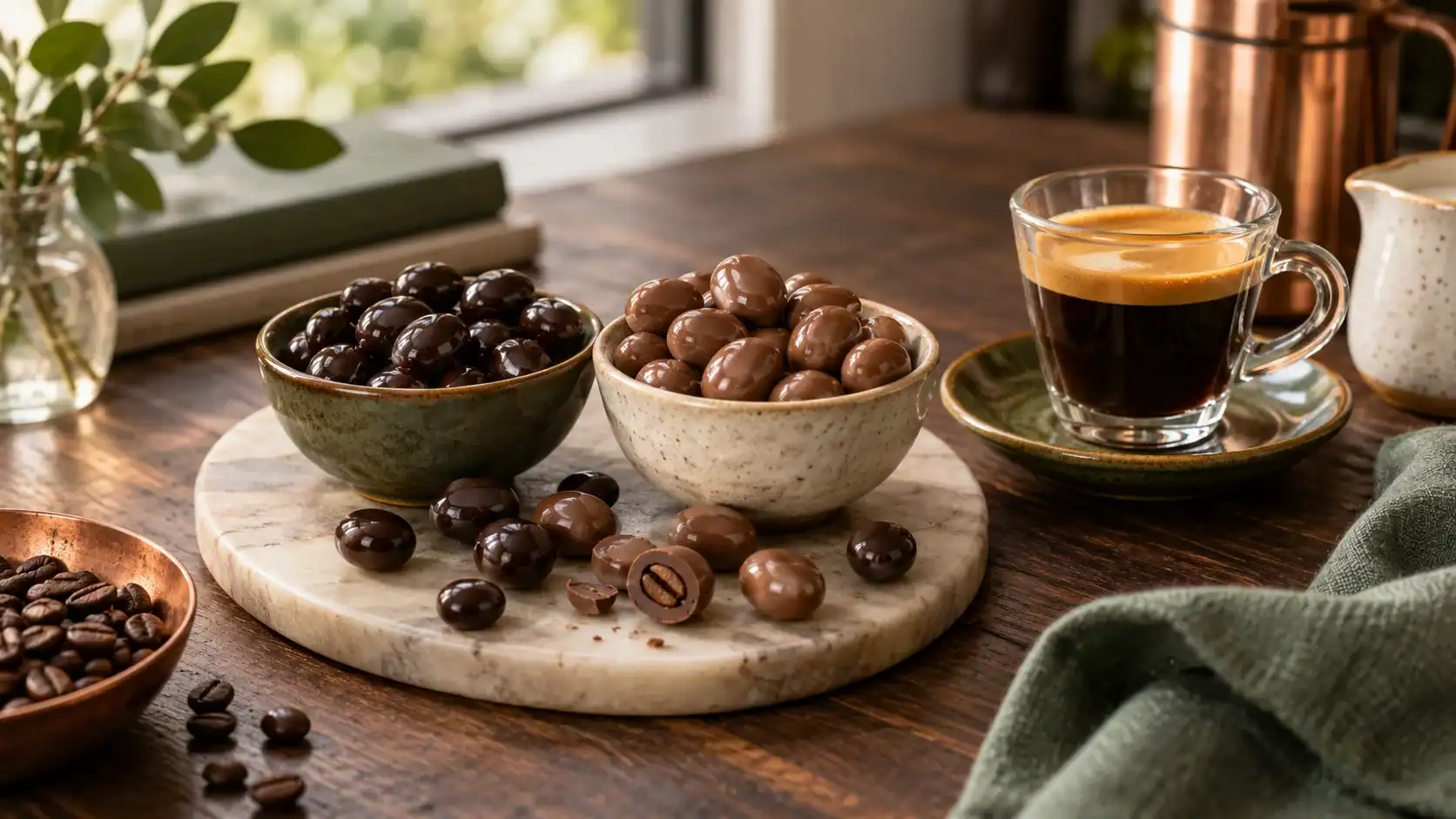
We recommend Dilettante’s three-pound Chocolate Covered Espresso Bean Blend when you want several chocolate styles to share and have enough people to use a bulk jar. It combines milk, dark, white and marbled coatings around whole roasted coffee beans. The compromise is that every serving is a caffeinated confection, and the label lists milk and soy. We’d choose the five-pound Dark Chocolate version only when you already know you want dark coating and can use the larger quantity.
The useful choice is variety versus a single coating, alongside the amount you can realistically share. Neither of these is a small sampler. If you want only an occasional handful or do not yet know whether you enjoy a crunchy whole coffee bean, we would look for a smaller clearly labeled package before committing to either bulk format.
The blend makes sense when chocolate preferences vary
The three-pound blend gives you several coating styles in one container. That is useful when you like switching between milk, dark, white and marbled chocolate or are sharing with people who prefer different kinds. You are buying variety around a roasted coffee center, rather than several different brewed-coffee flavors or a collection of filled chocolate truffles.
We would choose it for that mix, rather than assume every piece offers an identical balance of coating and coffee. A white-coated piece and a dark-coated piece can give different impressions even when the coffee center comes from the same brand’s blend. If you already know you dislike one of those styles, a mixed jar leaves you with some candy you may not want.
The jar format can be convenient for storing the remaining purchase after serving a portion. It does not make the entire container a sensible serving size or remove the need to keep it in appropriate conditions. We would put out a modest amount and retain the package information, especially when someone else will be eating from the same supply.
For gifting, make sure the recipient enjoys eating whole coffee beans, rather than simply likes chocolate or drinks coffee. The crunchy bean center is part of the product. Someone who expects a soft coffee-flavored filling may prefer a different confection, and a large jar is a substantial commitment when that texture is unfamiliar.
Choose dark-only when you know the coating you want
The five-pound Dark Chocolate version is the more direct choice for a group that specifically wants dark chocolate around its coffee beans. You avoid sorting through lighter coatings, but you take on a larger total purchase. We would buy it because the dark-only format fits the people sharing it, not because a larger bag must automatically be better value.
Dark chocolate is not a reliable shortcut for dairy-free or vegan suitability here. The manufacturer’s dark-chocolate ingredient panel includes milkfat and soy lecithin, and its Contains statement lists milk and soy. The blend also lists both. If either allergen is a problem, the difference between these coatings does not provide a suitable alternative.
The published panels also include a notice about a facility handling other ingredients, including tree nuts and wheat. Read the full current package and any relevant precautionary information before serving. We would not turn a dark label, a coating color or a familiar brand into an allergy-free assurance, particularly when choosing a gift for someone whose requirements you do not know.
For a shared table, keep the original label available and identify these as chocolate-covered coffee beans. That makes the caffeine-containing center clearer than presenting an unlabeled bowl as ordinary chocolate candy. If you need an option suitable for someone avoiding caffeine or an allergen listed on the pack, choose a different product rather than try to pick particular colors from the blend.
Portion size is more useful than a bean-to-coffee comparison
The manufacturer’s published nutrition panels use a thirty-gram serving, described as about eleven pieces. The piece count is an approximation, so weighing a portion is a clearer way to compare it with the stated nutrition information. Do not treat every bean’s size and coating thickness as identical when judging what you have put in a small bowl.
These are sweetened confections, including the dark-only version. The current published labels list fourteen grams of added sugars per thirty-gram serving for both products. Check the actual package you buy, since ingredients and nutrition details can change. Dark coating is a flavor choice here, rather than a reason to assume the product is sugar-free.
Both the roasted coffee bean and chocolate can contribute caffeine. We would not assign a fixed number of milligrams to every piece or translate a handful into a guaranteed number of cups of coffee without dependable product-specific information. The nutrition panel’s serving size is not a caffeine allowance, and the absence of a separate caffeine entry does not mean the product is caffeine-free.
Consider these alongside the coffee, tea and other caffeinated products you already consume. If you are sensitive to caffeine, have a relevant condition or medication, or are pregnant or breastfeeding, discuss appropriate limits with your healthcare professional. We would buy these for their chocolate-and-coffee character, rather than as a promised energy aid or substitute for sleep.
Delivery and storage matter for a bulk purchase
Chocolate can soften or melt during warm delivery, so check the seller’s current packaging and delivery arrangements before buying a large quantity. A product photograph cannot tell you how long a parcel will sit in heat at your address. Choose an arrival plan that lets you receive the package promptly rather than assume a bulk bag will be protected in every season.
Once it arrives, keep the product according to the package directions and avoid treating a resealable container as protection from a hot room or direct sunlight. The useful question is whether you have an appropriate place for the quantity that remains after your first serving. Five pounds is much more storage and sharing commitment than a small candy pouch.
A three-pound blend and a five-pound dark-only bag are not equal-sized offers, and a multipack can change the total quantity again. Current ingredients and the condition of the food matter more than an older package image.
Our recommendation
Choose the three-pound blend for a group that wants several chocolate styles, or the five-pound dark-only bag for an established dark-chocolate preference and enough people to share it. For occasional use, start smaller. For either bulk option, the current label, amount of coffee beans and warm-weather delivery arrangements matter.
As an Amazon Associate I earn from qualifying purchases.