
Reviewed and updated: November 7, 2026
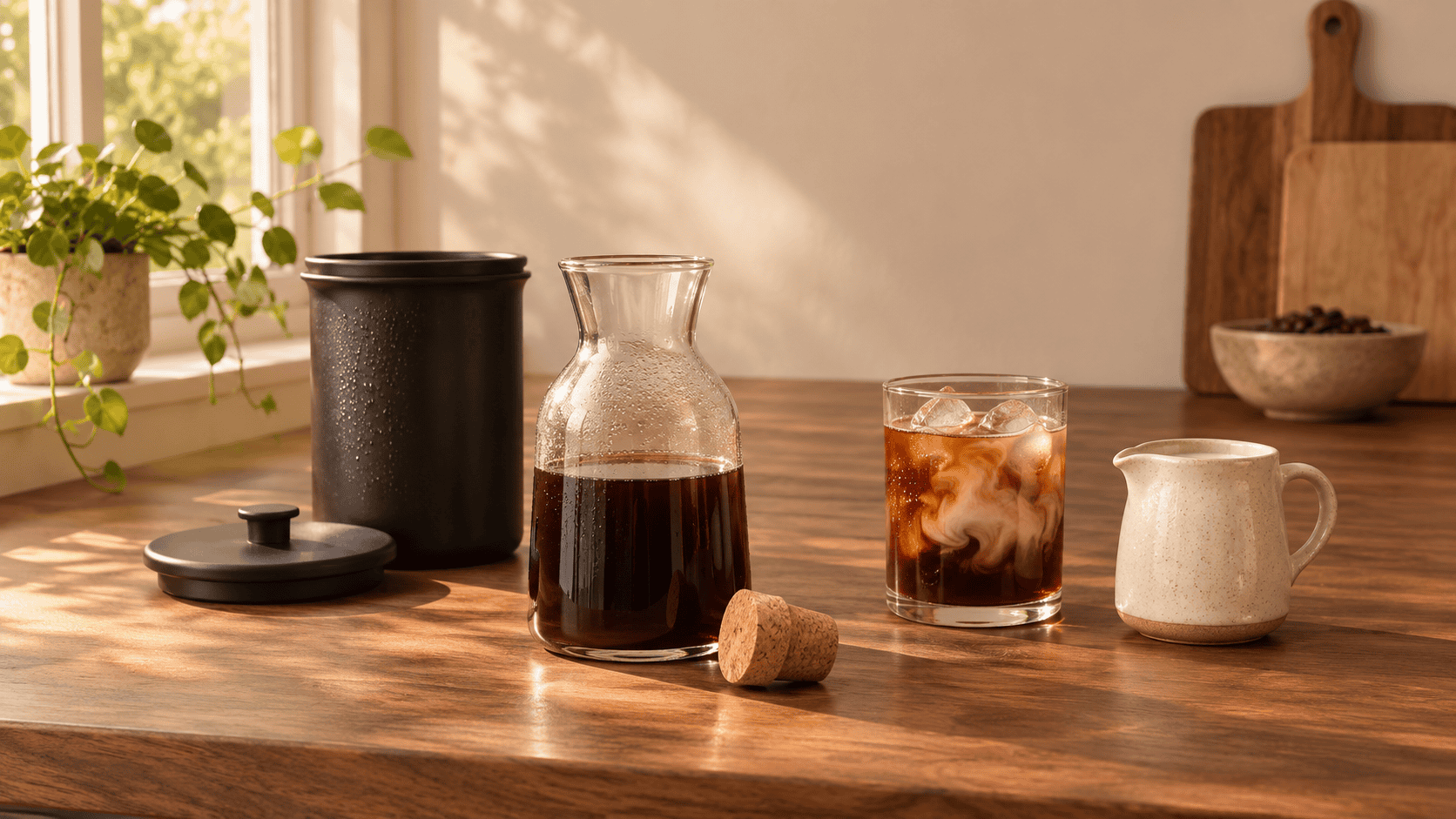
The OXO Brew Compact Cold Brew Coffee Maker makes sense when you want a modest batch of concentrate and are happy to dilute each drink. It is less compelling if your ideal routine is pouring a large glass straight from a ready-to-drink pitcher. The useful buying distinction is the workflow: steep in one container, drain into a separate carafe, then measure concentrate when serving.
This review is based on OXO’s current product information and instruction manual, rather than hands-on testing. It covers the Compact model, SKU 11237500. OXO also sells other cold brew equipment, so check the full product name before choosing a search result.
Choose it for concentrate, not a full pitcher
The advertised 24-ounce brewing container should not be read as 24 ounces of finished coffee. OXO’s example recipe uses 175 grams of coffee with 700 mL of water and lists an approximate 16-ounce yield. Some water stays with the grounds. The resulting concentrate is intended to be mixed with water or milk, rather than treated as a standard serving of brewed coffee.
That distinction makes the Compact worth considering for one drinker who likes controlling each serving. A smaller bottle of concentrate can support different drinks without occupying the space of a large prepared pitcher. But the number of drinks depends on your portions and dilution; a manufacturer’s serving estimate cannot establish how many of your own large glasses it will fill.
OXO Brew Compact Cold Brew Coffee Maker 11237500
Choose it for a smaller concentrate batch, automatic draining into its glass carafe and nested storage. Skip it if you want a large ready-to-drink pitcher or dislike measuring dilution.
The serving calculation comes before the purchase
OXO suggests one part concentrate to two or three parts water or milk as a starting point. For example, 60 mL of concentrate would take 120–180 mL of diluent before ice. Those are recipe proportions, not a measured result from our kitchen. You can decide whether that style of drink sounds appealing before adding another brewer to the counter.
If you normally pour generously without measuring, concentrate introduces another decision each morning. That can be useful when people want different strengths, or annoying when you want the fewest steps. Think about the glass you actually use, the amount of milk you add and whether you are willing to repeat the same proportions. Capacity alone does not answer those questions.
Allow time for steeping and draining
The manual distinguishes a 12–24-hour counter steep from a 20–24-hour refrigerator steep. This is equipment for planning ahead. The word Compact describes its format, not a quick extraction process. If you need coffee shortly after remembering to make it, cold steeping is unlikely to solve that problem regardless of how little storage space the brewer needs.
Consider a normal evening and morning before buying. You need a place for the covered brewing container while it steeps, followed by time and space to drain it. There is no reason to promise yourself a complicated schedule: choose the method only if the preparation fits a routine you can maintain. Follow the supplied instructions for your chosen steeping method.
Understand the separate carafe workflow
After steeping, placing the brewing container on the supplied glass carafe starts drainage automatically. This differs from lifting a basket out of a pitcher that already contains the drink. It gives you a separate vessel for serving and refrigerator storage, but it also means you must keep the intended receiving carafe available when the brew is ready.
OXO identifies the carafe as borosilicate glass and describes a cork stopper with a silicone seal. Treat those as material and design details, not a guarantee against breakage or leakage in a bag. This is a home brewing setup, rather than a substitute for a dedicated travel mug. Plan a stable draining position where the assembly will not be knocked.
Small storage does not mean no working space
The brewer and carafe nest when stored, a useful feature if equipment has to return to a cupboard after use. During brewing and draining, however, the pieces have different jobs. Check the shelf or counter where each stage will happen instead of judging the purchase only by a neat photograph of the nested parts.
Leave clearance for handling the container and for placing it on the carafe. If the only available spot is crowded by dishes or frequently moved appliances, a simpler vessel may be easier to live with. A small brewer can still be an awkward purchase when its working position gets in the way of preparing breakfast or washing up.
The reusable filter brings a cleaning commitment
The Compact uses a reusable stainless steel mesh filter. Its base comes apart so the filter can be removed for cleaning. That avoids making disposable filters the central part of the routine, but it leaves wet grounds to empty and several parts to rinse. Choose it when cleaning a filter and reassembling a base are acceptable tasks after each batch.
The manual makes gasket position and alignment markings part of correct assembly. This is worth understanding before buying: the seal depends on putting the parts back together properly. If small seals or threaded assemblies tend to frustrate you, the convenience of automatic draining may be offset by that maintenance. Follow the instructions instead of relying on memory after the first wash.
Who should choose it, and who should skip it?
Choose the Compact if you want a dedicated concentrate routine, a separate serving carafe and equipment that nests between uses. It particularly suits a person who likes measuring a modest serving and adjusting it with water or milk. Its appeal is an organized process, not a promise that the brewer will improve any coffee automatically.
Skip it if several people need large ready-to-drink batches, if you dislike dilution, or if the preparation schedule is unrealistic. A pitcher-style option is worth comparing when you prefer a different workflow; our Mizudashi size comparison examines that kind of purchase. Neither format removes the need to choose coffee, grind it appropriately and keep the equipment clean.
Check the complete model before ordering
The Amazon button opens a precise search for the Compact Cold Brew Coffee Maker 11237500 from OXO, rather than a guaranteed exact listing. Confirm that the selected result is a complete brewer with the intended carafe, not a replacement part, filter pack or another OXO model. Compare the written description with the product name instead of relying on a search thumbnail.
If the concentrate workflow fits, start with the supplied recipe and record your dilution separately from the brewing recipe. Our guide to useful coffee notes can help you keep those choices repeatable. Buy this model for the smaller concentrate-and-carafe routine; keep your current setup when it already provides the volume and convenience you want.
As an Amazon Associate I earn from qualifying purchases.