
Reviewed and updated: November 10, 2026
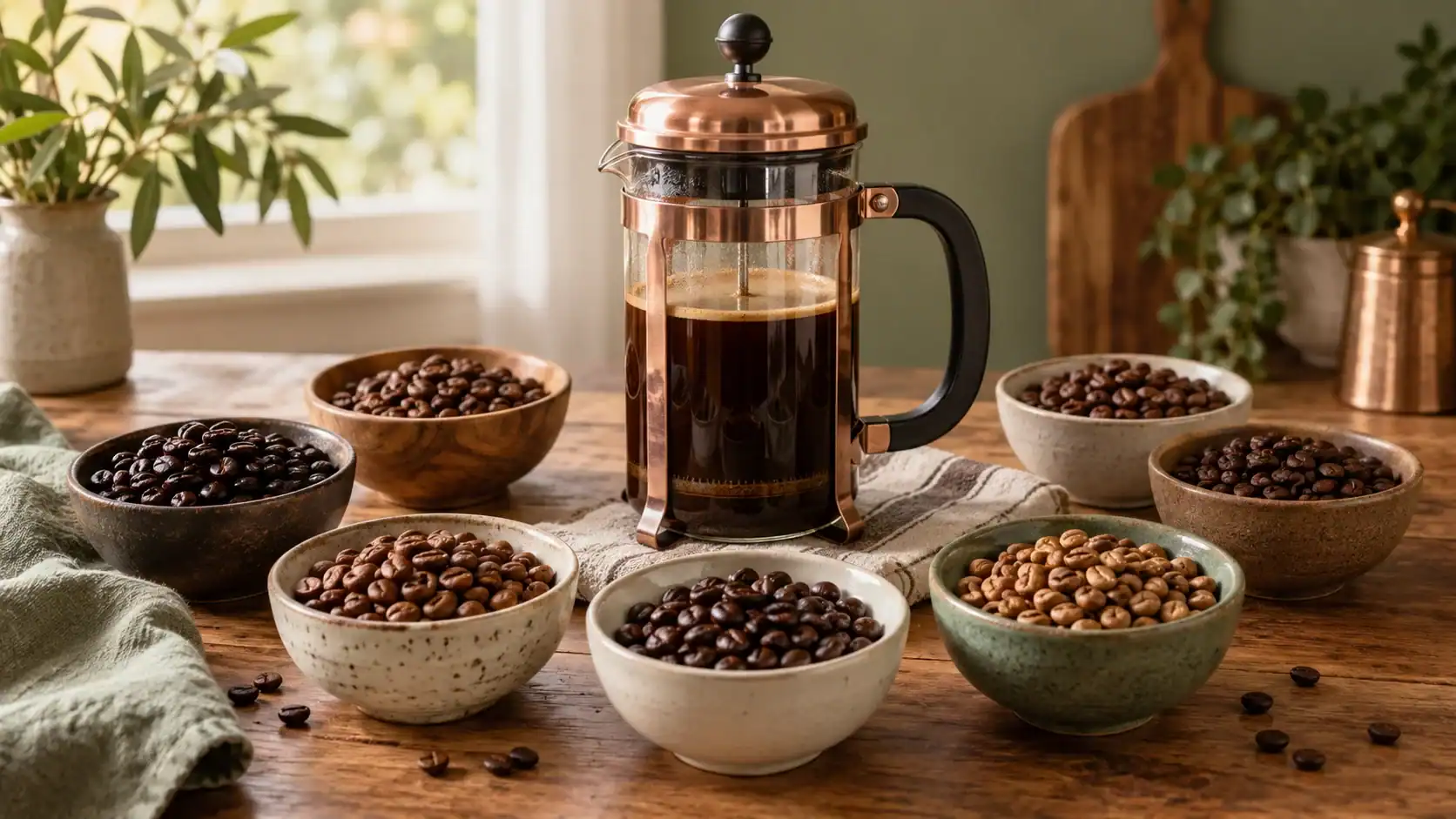
We recommend Kicking Horse Three Sisters as the starting point if you want French-press coffee with cocoa and fruit character rather than a deliberately smoky profile. Choose Kick Ass or Peet’s Major Dickason’s when a darker, earthy direction is what you enjoy. The main compromise with any whole-bean recommendation is the grinder: you need to prepare a suitable grind yourself rather than pour beans straight into the press.
These seven coffees offer different reasons to buy, not a claim that one bag wins every taste preference. We would choose the flavor direction first, then the format and bag size. The roasters’ tasting descriptions help narrow the choice; they are expectations for the coffee, rather than added ingredients or a promise that your cup will taste exactly like a listed fruit.
Start with the balanced option, then move darker if you want to
The roaster lists French press among its brew methods. Choose the whole-bean version if you want to set the grind yourself.
Three Sisters is our starting recommendation because its stated cocoa and stone-fruit character gives you a useful middle direction. It is the bag we would consider before choosing a coffee specifically for smoke or a sharply fruit-led description. The roaster lists French press as a recommended method, and the whole-bean version lets you set the grind for your own press.
If you already know that roasted, smoky coffee is what you like, there is little reason to work through a gentler starting point first. Kick Ass moves the choice toward molasses, chocolate malt and an earthy finish. We would choose that direction deliberately, especially when those notes sound more inviting than citrus or berry.
We would choose Kick Ass when molasses, chocolate malt and an earthy finish sound more appealing than a brighter fruit-led blend. Its smoky aroma makes this a deliberate roasted-profile choice, rather than our neutral starting recommendation.
Major Dickason’s is the other dark-roast option we would consider, with Peet’s stated earth-and-spice profile. Choose it for that particular direction rather than assume every dark blend tastes interchangeable. A roast label is a useful first filter, but the flavor description is what helps separate two bags that otherwise appear similar.
It offers a different flavor direction from the sweeter fruit-and-cocoa starting point; confirm whole beans rather than similarly named pods.
Choose a brighter blend when fruit is part of the appeal
Holler Mountain is our recommendation when you want to move toward a brighter medium roast with citrus, caramel and berry-jam notes. That is a more useful reason to try it than the assumption that French press must always mean a dark, heavy coffee. Your preference can favor fruit character while keeping the immersion brewer you already enjoy.
It is the more relevant direction if you enjoy fruit character rather than a deliberately smoky finish.
Hair Bender takes a different route, combining Stumptown’s citrus, dark-chocolate and raisin description with an explicit recommendation across French press, espresso, pour-over and drip. We would choose it if one bag needs to work across your household’s brewers. Espresso blend describes its intended use, not a requirement to grind it finely for every method.
Choose Hair Bender when citrus alongside dark chocolate and raisin sounds appealing and you also make espresso or pour-over. Stumptown explicitly recommends this blend across those methods and French press; the espresso label does not dictate a fine grind.
Smart Ass is the more pointed alternative if red currant and milk chocolate sound appealing. We would compare it with Three Sisters when you want a different fruit direction without making the choice solely around a country name. Origin labels and roast words cannot tell you as much as the actual blend’s current description.
It is a more pointed fruit-led alternative to Three Sisters, not a promise of a sweeter finished drink.
Make decaf a deliberate choice, rather than an afterthought
The Decaf blend is the option we would choose when reducing caffeine is part of the purchase and chocolate-and-nut notes suit you. Its Swiss Water process and stated roasted-hazelnut profile give you a concrete alternative to the caffeinated bags above. Decaf still can contain caffeine; do not choose it on the assumption that the word means none.
Choose the Swiss Water–processed Decaf when reducing caffeine is part of the purchase. The roaster describes chocolate and roasted-hazelnut notes and lists French press as a suitable method. Decaf is not a guarantee of zero caffeine.
The right format matters as much as the blend
These actions are for whole-bean coffee, which gives you control over grinding for a press. If you do not have a grinder and do not want one, choose a clearly identified suitable ground format instead. Our coarse-ground French-press comparison focuses on that purchase, including why ordinary drip grounds are not automatically the same choice.
We would begin with a manageable bag while you decide whether you like the blend. A larger package is useful after the flavor is a known preference and your household uses it steadily. Buying several unfamiliar bulk bags together gives you less flexibility if the first one turns out to be a direction you do not enjoy.
A photograph of beans does not settle which option is selected. The useful purchase is the actual format and quantity you can use, with the coffee’s current label matching the description that drew you to it.
Our recommendation
Start with Three Sisters for cocoa-and-fruit balance, or move directly to the darker or brighter profile you already prefer. Choose the Decaf when that is your caffeine preference. Choose the blend and amount of whole-bean coffee that suit your household.
As an Amazon Associate I earn from qualifying purchases.