
Reviewed and updated: November 2, 2026
Coffee-grinder static can leave chaff on the counter, grounds clinging to the catch cup, and a dusty ring around the grinder chute. A tiny amount of water is a popular workaround, but it is not the only approach—and some grinder manuals specifically caution against moisture. You can reduce mess without adding water by controlling dryness, cleaning the right areas, waiting before opening the cup, and changing how you transfer grounds.
Why grounds become staticky
Grinding creates friction as brittle roasted beans break into many small particles. In dry air, electrical charge does not dissipate quickly, so fine coffee and chaff cling to plastic, metal, and each other. Darker roasts may shed more surface oil, while very dry beans can produce more visible chaff; either can change the mess you see.
Static is not the same as retention. Static makes particles cling or jump, while retention is coffee remaining in the burr chamber or chute. A grinder can have both problems. A careful routine may reduce the countertop mess even if a small amount still remains inside the machine.
Follow the grinder manual first
Unplug the grinder before cleaning or reaching near the burrs. Use only brushes and cleaning methods approved for the model. Do not spray water, cleaner, or compressed aerosol into the burr chamber. Avoid inserting metal tools into the chute or defeating safety switches.
If the manufacturer provides a removable upper burr, hopper, catch cup, or anti-static insert, remove it only as directed. Keep track of alignment marks and reinstall each part completely before use. Our manual-grinder selection guide covers practical grinder design considerations.
Let the grounds settle
After grinding stops, wait ten to twenty seconds before removing the catch cup. Give the grinder body one gentle tap with an open hand if the manual does not prohibit it. The pause allows airborne fines to settle and some charge to dissipate.
Remove the cup slowly and keep it level. Snapping it out quickly can pull a cloud of chaff behind it. If the lid is removable, carry the covered cup to the brewer before opening it.
Use a natural-bristle brush
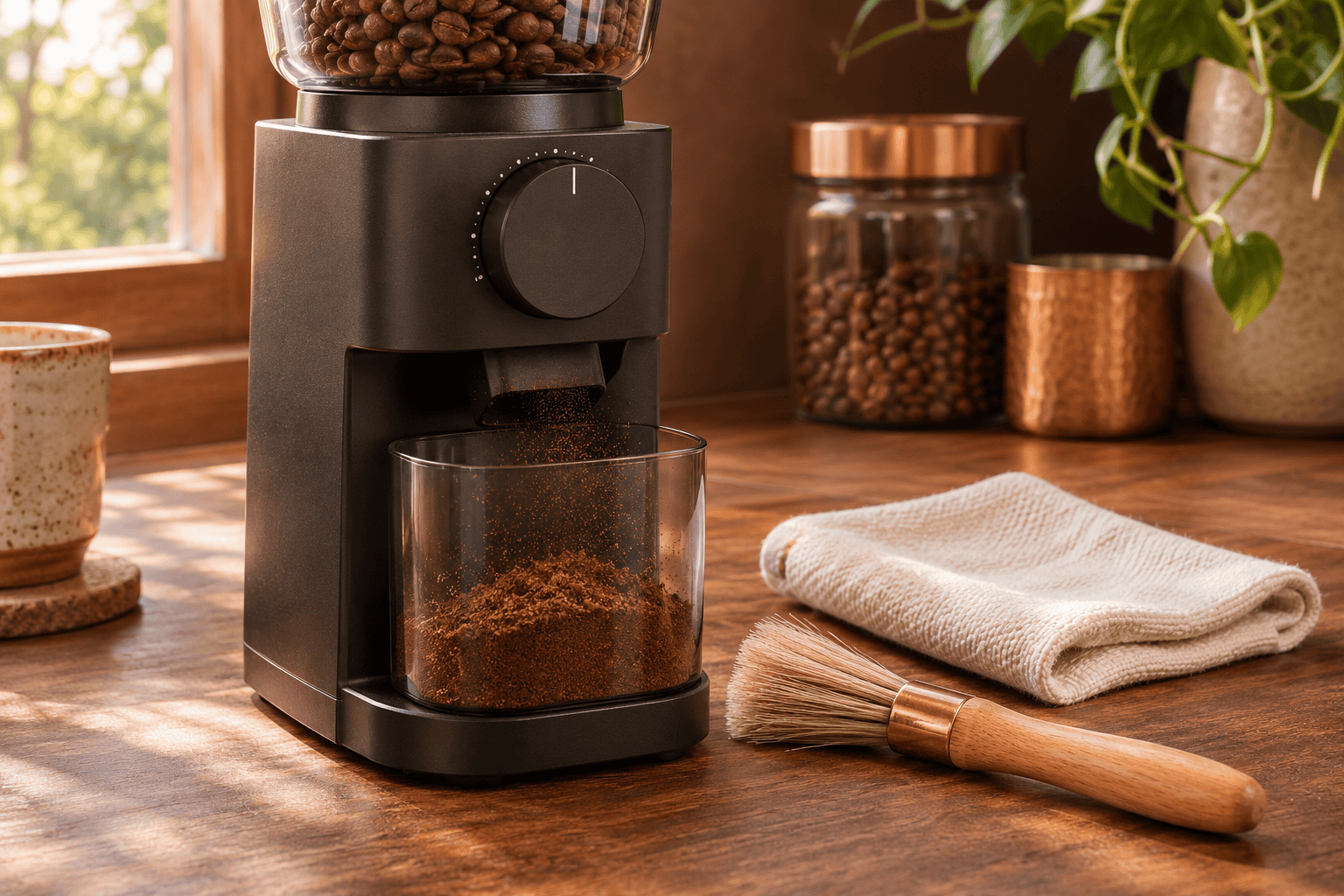
A small, clean brush can gather dry grounds from the chute lip and catch-cup rim without pushing moisture into the grinder. Natural bristles often behave more calmly around static than a fuzzy synthetic duster, although performance varies. Reserve the brush for coffee equipment so it does not introduce soap, spices, or household dust.
Brush into the catch cup or onto a washable tray. Do not brush toward the motor vents. Periodically clean the brush according to its material and let it dry fully before returning it to coffee duty.
Change the transfer method
A wide catch cup gives flying particles more room to escape. If your grinder allows it, grind into a narrower, conductive metal dosing cup that fits securely and does not interfere with safety features. Do not improvise a container that can touch moving parts or prevent the grinder from locking correctly.
When pouring, bring the cup close to the brewer and tilt it slowly. For a portafilter, a dosing funnel can keep grounds from spilling over the basket edge. For pour-over or drip brewing, pour into the filter over a tray rather than carrying an open cup across the kitchen.
See our guide to coffee-to-water ratios without waste for workflow ideas for espresso and filter coffee.
Keep the anti-static path clean
Some grinders use a small flap, strip, screen, or ionizing feature near the exit chute. Coffee oils and fines can coat that area and reduce its effect. Consult the manual before touching it; some pieces are delicate and should not be bent or removed.
Clean the catch cup too. A thick oily film can hold fines even when electrical charge is low. Wash only parts labeled washable, keep them out of the dishwasher unless permitted, and dry them completely. Reinstalling a damp cup near coffee dust creates clumps and may carry moisture toward the grinder.
Moderate an extremely dry room
Static is often worst during winter heating. If the room is uncomfortably dry, a properly maintained household humidifier may reduce static in many materials, including coffee grounds. Follow the appliance’s cleaning guidance and avoid placing it close enough to mist the grinder or beans.
Do not store beans in a refrigerator to add humidity. Condensation and odor exposure are bigger problems than the static benefit. Keep coffee sealed in a cool, dark cabinet and grind shortly before brewing.
Test dose size and grind setting
Very small doses sometimes scatter more because the catch cup has little mass to settle the fines. Very fine settings create more small particles that cling to surfaces. You should not change a recipe solely to control static, but it helps to observe whether the mess is associated with one particular coffee or setting.
Record the bean, dose, grind setting, weather, and mess for several brews. If static rises suddenly with no other change, clean the chute and cup before assuming the grinder is failing. If output becomes inconsistent or the motor sounds unusual, stop and inspect the grinder according to the manual.
Avoid risky shortcuts
Do not use dryer sheets, fabric spray, household anti-static spray, or lubricants on coffee equipment. These products are not intended for food-contact surfaces. Do not blow into the chute; breath adds uncontrolled moisture and can move coffee dust deeper into the grinder.
Avoid vacuuming near exposed burrs unless the manufacturer specifically permits it and the grinder is unplugged. A standard vacuum nozzle can strike parts, generate static, or remove small components. Never use canned air, which may contain propellants and can drive debris into the motor area.
Build a low-mess routine
Weigh the beans, grind, wait briefly, remove the cup slowly, and brush the chute lip with the grinder unplugged when necessary. Pour close to the brewer over a tray, then wipe the work surface with a dry or barely damp cloth away from the grinder opening. Empty the tray after each session so yesterday’s fines do not become today’s dust.
Once a week—or at the interval recommended for your use—clean the removable cup and accessible dry areas. Keep beans sealed and the room reasonably comfortable. These habits address the causes around the grinder without introducing water to the beans or burr chamber.
If static remains severe, check whether the manufacturer offers an updated catch cup, anti-static insert, or service guidance for the exact model. A purpose-built part is safer than modifying the chute. The cleanest workflow is not necessarily the one with zero retained specks; it is the one that produces a repeatable dose, keeps food-contact surfaces clean, and avoids creating a new equipment problem while solving a small mess.