
Reviewed and updated: October 15, 2026
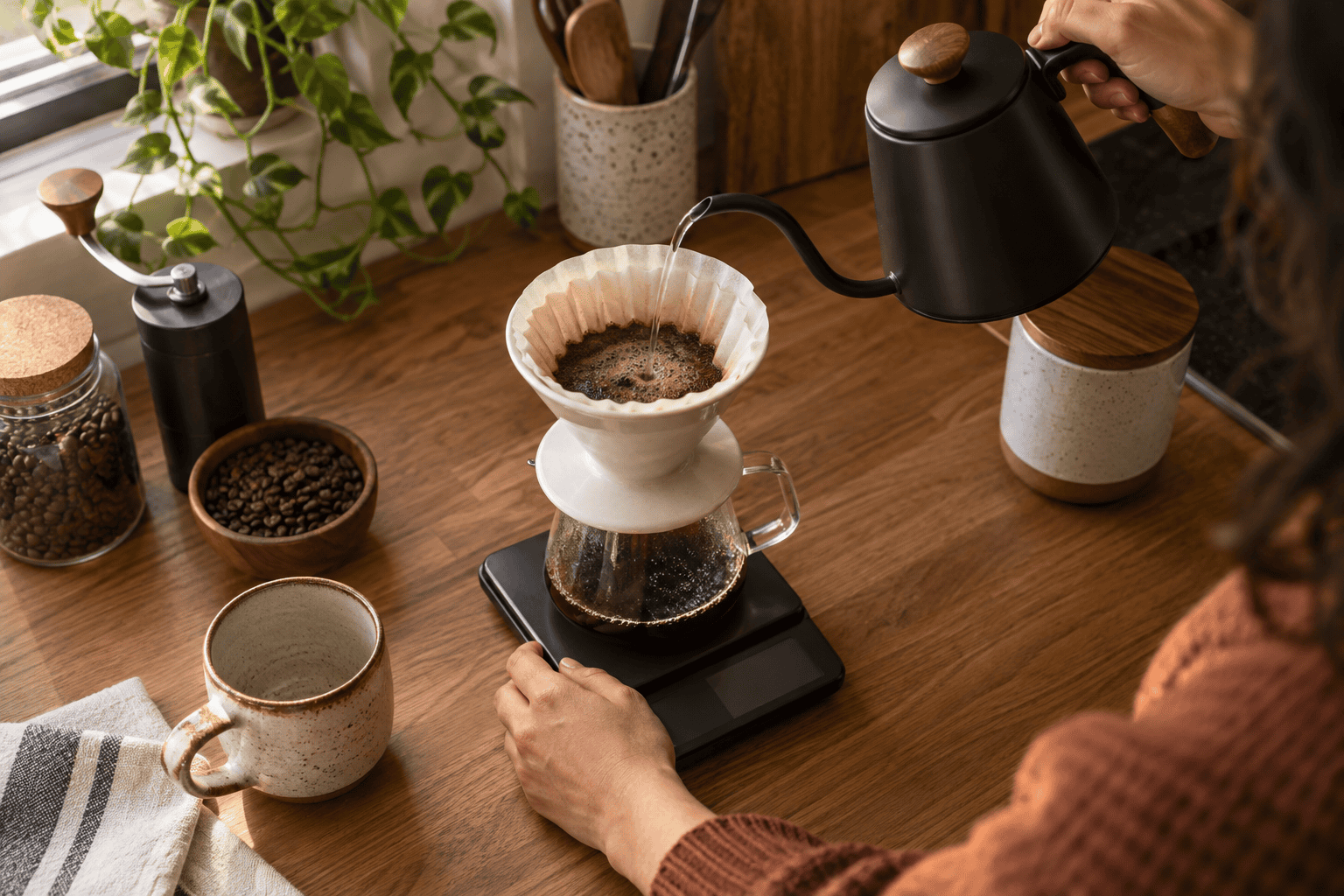
Use weight instead of scoops
Coffee beans and grounds vary in density, so a scoop is not a stable unit. A basic gram scale makes recipes comparable. Weigh the dry coffee and total brewing water. If you cannot use a scale, keep the same scoop, fill method, and cup, but understand that adjustments will be less precise.
Choose a sensible starting ratio
A common starting neighborhood is one part coffee to roughly fifteen to seventeen parts water by weight. This is a range, not a rule. Brewer design, roast, grind, and taste all matter. Pick one point and write it down rather than changing dose and water together from memory.
Make a smaller test brew
Use the smallest batch your brewer handles reliably. A pour-over may work well with fifteen grams of coffee; a large automatic machine may need more to wet the bed evenly. Respect the manufacturer’s minimum. A tiny batch that channels badly teaches less than a modest batch brewed within the equipment’s intended range.
Hold the grind steady first
Brew the starting ratio with a consistent grind, water temperature, filter, and pour pattern. Taste after the cup cools slightly. If you change grind at the same time as ratio, you will not know which move helped. Keep notes brief: dose, water, grind setting, brew time, and a few flavor words.
Adjust strength with ratio
If the cup is balanced but feels too light, use slightly more coffee or less water. If it is balanced but too intense, move the other direction. Change by a small amount, such as one gram of coffee in a small brew. Strength and extraction are related, but they are not identical problems.
Use grind to address extraction
A sour, sharp, or hollow cup may need more even extraction, while harsh dryness or heavy bitterness can point the other way. Before changing ratio again, check grind, contact time, agitation, and water. Coffee vocabulary is imperfect; compare two controlled brews rather than diagnosing from one dramatic adjective.
Account for water and freshness
Water that tastes unpleasant will not produce a clean cup. Use safe drinking water with a mineral balance suitable for coffee and avoid distilled water unless a recipe adds minerals. Freshly ground coffee is easier to evaluate, but roast date alone does not determine quality. Store beans sealed, cool, dry, and away from light.
Keep the recipe you can repeat
Once two or three tests identify a cup you enjoy, save the ratio and method. Recheck when the coffee, grinder, brewer, or batch size changes. The goal is not a universal perfect number. It is a dependable recipe that uses the beans efficiently and gives you a clear path when the next bag behaves differently.
A practical one-week plan
Use this guide as a short experiment rather than changing everything at once. Read the full process, choose the first step that addresses a real problem, and note what you are trying to learn. A written plan makes the result easier to judge and prevents an enthusiastic first day from turning into an inconsistent routine.
- Use weight instead of scoops: write down the one choice you will test, keep the other variables steady, and review the result before adding another change.
- Choose a sensible starting ratio: write down the one choice you will test, keep the other variables steady, and review the result before adding another change.
- Make a smaller test brew: write down the one choice you will test, keep the other variables steady, and review the result before adding another change.
- Hold the grind steady first: write down the one choice you will test, keep the other variables steady, and review the result before adding another change.
- Adjust strength with ratio: write down the one choice you will test, keep the other variables steady, and review the result before adding another change.
- Use grind to address extraction: write down the one choice you will test, keep the other variables steady, and review the result before adding another change.
- Account for water and freshness: write down the one choice you will test, keep the other variables steady, and review the result before adding another change.
- Keep the recipe you can repeat: write down the one choice you will test, keep the other variables steady, and review the result before adding another change.
Review the result
At the end of the week, compare the outcome with your starting point. Keep the steps that were easy, safe, and useful. Revise anything that depended on guesswork, caused discomfort, or was difficult to repeat. When a product manual, care label, venue rule, or healthcare professional gives more specific direction, follow that guidance over a general article.
The best routine is understandable enough to explain and simple enough to perform the same way next time. Save the relevant links, keep a short note with the equipment or product, and schedule another review when conditions change. That small record turns a one-time tip into a dependable habit.
Questions to ask before the next attempt
What changed, what stayed constant, and what evidence supports the conclusion? Was the starting condition documented clearly? Did convenience or expectation influence the result? Answering those questions keeps the next attempt focused. It also helps another family member follow the same process without relying on memory or assumptions.
Take a fresh look in normal conditions rather than judging immediately. Note any safety warning, maintenance need, or storage issue that surfaced. If the result is unclear, repeat the smallest reasonable test instead of making several adjustments together. Consistency is more informative than complexity, and stopping is always appropriate when instructions, comfort, or safety are uncertain.
Keep the routine easy to audit
Store the instructions, notes, and any relevant model or product details in one place. Date the note so an older recommendation is not mistaken for current guidance. Before repeating the routine, confirm that the equipment, garment, product, location, or personal circumstances have not changed. Small differences can matter, and a quick review is usually easier than correcting a preventable mistake afterward.
Share the plan with anyone else who may use it. Clear steps reduce improvisation and make it easier to notice wear, discomfort, unexpected results, or missing information. Retire a step that no longer serves a purpose, and avoid adding a new purchase merely to make the routine look complete. Practical care comes from attention, appropriate limits, and decisions that can be explained.
Finally, revisit the original goal before calling the process finished. A routine is successful when it solves the stated problem safely and predictably, not when it contains the most steps. Keep the evidence that helped, discard assumptions that did not hold up, and make the next decision from the result you actually observed.