
Reviewed and updated: November 12, 2026
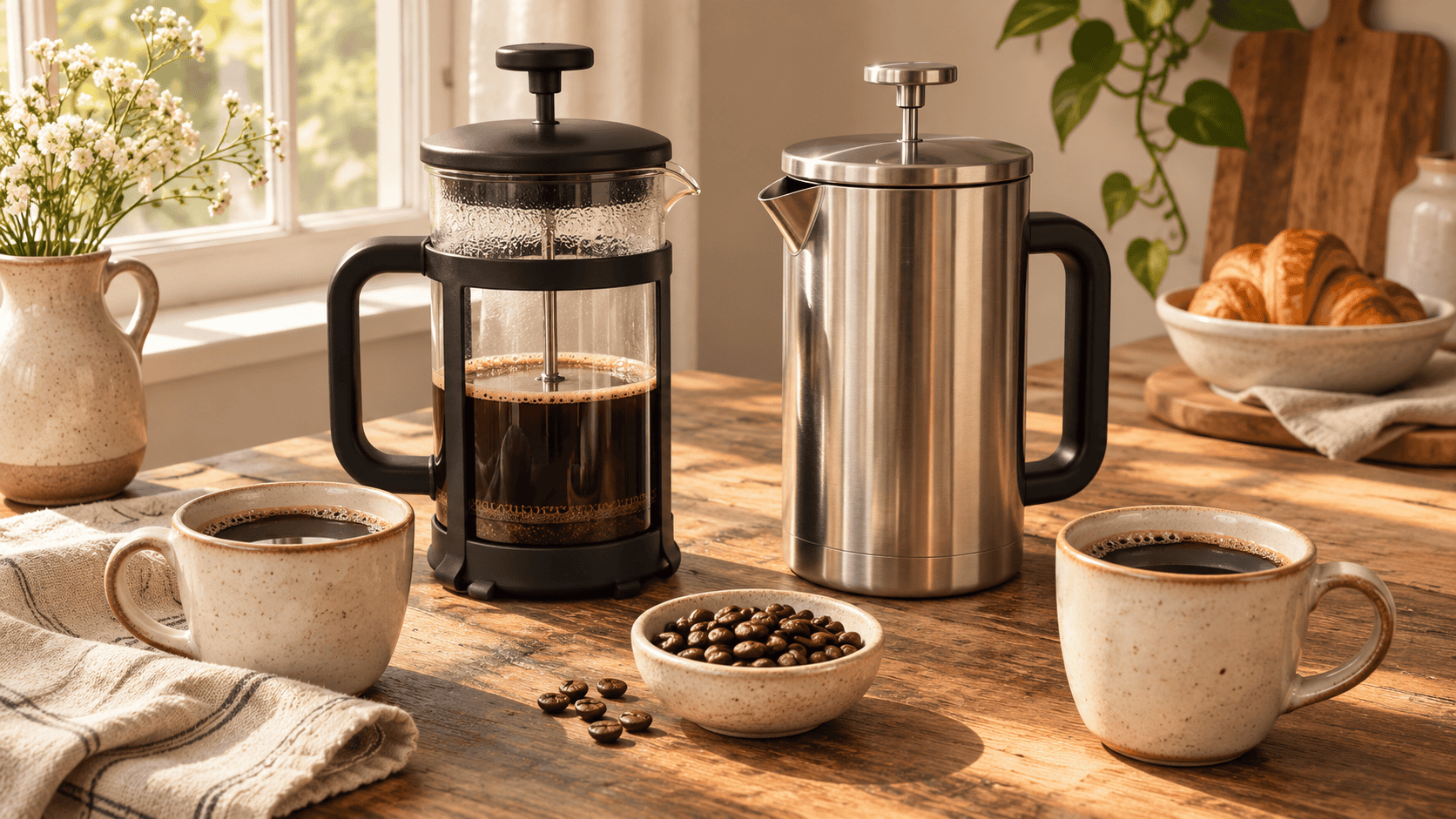
A pot of coffee belongs wherever the conversation is happening. For a leisurely breakfast with refills, we’d choose the insulated ESPRO P7; its steel body makes more sense when the second cup comes later. The glass P3 is our alternative when you love seeing the coffee and usually pour the batch soon after brewing. Both bring ESPRO’s double-filter system to your table, so the choice is mostly about the pot you’ll enjoy serving from.
We’re comparing the 32-ounce versions here. They’re appealing for coffee to share, with one important limit: both have a 24-ounce minimum brew size. Neither is the one we’d buy for a tiny solo cup. Get that fit right first, and choosing between a visible glass pot and insulated steel becomes a much more enjoyable decision.
The P7 suits coffee that stays at the table
The P7’s double-wall stainless steel body is the feature we’d buy it for. It gives a shared batch some insulation while you settle into breakfast, catch up with someone or reach for a refill. There’s no hot plate keeping the pot tied to a particular spot. You can bring it to the table and let the coffee be part of the morning.
The tradeoff is that you can’t see how much is left through the sides. That’s easy enough to live with when you know who’s had a cup, but glass is more helpful when several people are helping themselves. We’d decide how much that quick glance matters before choosing a finish just because it looks lovely beside the mugs.
Steel also removes the worry of a glass vessel meeting a hard sink. It doesn’t make the whole press indestructible, and the filter assembly still deserves care. We simply find the material a more convincing fit for a busy shared kitchen. Its listed weight is 2.6 pounds before the coffee goes in, so consider that heft if you prefer a lighter pot to lift and pour.
The P3 keeps the classic glass appeal
There is something inviting about being able to see the coffee waiting in the pot. The P3 gives you that familiar French-press view, with a borosilicate glass carafe held in a plastic frame. We’d choose it when watching the brew and seeing the remaining coffee are part of what you like about this style of maker.
A locking mechanism holds the glass within the frame. That’s useful reassurance when handling the assembled press, but the glass still needs a gentle home around the sink and counter. We’d be comfortable choosing it for a settled kitchen spot where the pot is unlikely to get knocked. For frequent carrying between rooms or a crowded washing-up area, the steel P7 has more appeal.
The P3 isn’t the insulated choice. It makes most sense when you brew, pour and enjoy the coffee without planning a long stretch of refills. At a listed 1.8 pounds, it’s also lighter than the matching 32-ounce P7. That difference may be more welcome in your hand than an extra feature you wouldn’t use.
The filters are a reason to consider either one
You don’t need the steel body to get ESPRO’s double micro-filters. Both presses use the nested filter arrangement, with two stages of fine mesh separating the coffee from the grounds. If the sediment at the bottom of an ordinary French-press cup is the part you enjoy least, that’s the shared feature worth considering.
The filter seal keeps the pressed grounds apart from the coffee you’re serving. Some liquid remains below it with those grounds; leave that behind rather than lift the plunger to chase the last little splash into your cup. Think of it as part of how the brewer works, rather than treating every drop left in the pot as another serving.
Optional ESPRO paper filters can go into the system too. They give you another way to filter the coffee, but they’re a separate purchase and aren’t necessary to get started. We’d try the supplied reusable filters before building up a drawer of extras. Your preferred coffee and texture should guide that choice, rather than the idea that every accessory belongs in the first order.
Make sure the shared batch really suits you
The 24-ounce minimum matters more than a generous-looking pot. These 32-ounce versions are intended for a substantial batch, not for making a few ounces whenever you fancy a sip. We’d picture the mugs you and your coffee companion actually fill, with room left for milk if you like it, before deciding this is the right size.
For one modest coffee at a time, we’d look at a smaller brewer instead. ESPRO also offers 18-ounce versions, which have their own minimums; don’t assume the larger pot will happily make the smallest recipe. Our French press and AeroPress comparison is helpful when you’re still choosing between a shared pot and an individual cup.
Neither press heats water or grinds beans. You’ll need a separate kettle and coffee ground appropriately for the brewer. That can be a lovely, simple arrangement if choosing the beans is already part of your morning. It is less convenient when you’re hoping a new machine will handle the whole coffee-making job while you do something else.
Leave a little room for cleanup
The fine filters bring an ownership tradeoff: there are two baskets to clean. They twist apart so you can gently wash both with soap and water, using a cloth or sponge to remove the grounds from the mesh. We’d take that extra attention seriously if you’re moving from a very simple press and hoping for fewer pieces at the sink.
Coarse grounds and clean screens help the plunger move properly. If it becomes difficult to press, stop rather than force it; check the grind and clean the filters. Use the supplied assembly and handling directions, let hot parts cool before washing, and keep both brewers off a stove or other direct heat source. The P7’s steel body doesn’t turn it into a kettle.
You’ll also have wet grounds to empty after each batch. Our French-press grounds cleanup advice can help you plan that little job. The right choice is a press whose serving appeal makes its care feel worthwhile, not a beautiful pot that stays in the cupboard because you dread washing it.
Which one would we put on the breakfast table?
We’d pick the P7 for insulated refills and a steel pot you can pass around without worrying about a glass carafe. We’d pick the P3 for the visible coffee, lighter lift and a batch you’ll enjoy promptly. Both make sense when you want ESPRO’s filters and a shared brew; the body is where your preference gets its say.
The brushed-steel P7 and black-framed glass P3 here are the complete 32-ounce presses. Choose the pot that fits the way you’d like to linger over your coffee.
As an Amazon Associate I earn from qualifying purchases.