
Reviewed and updated: November 14, 2026
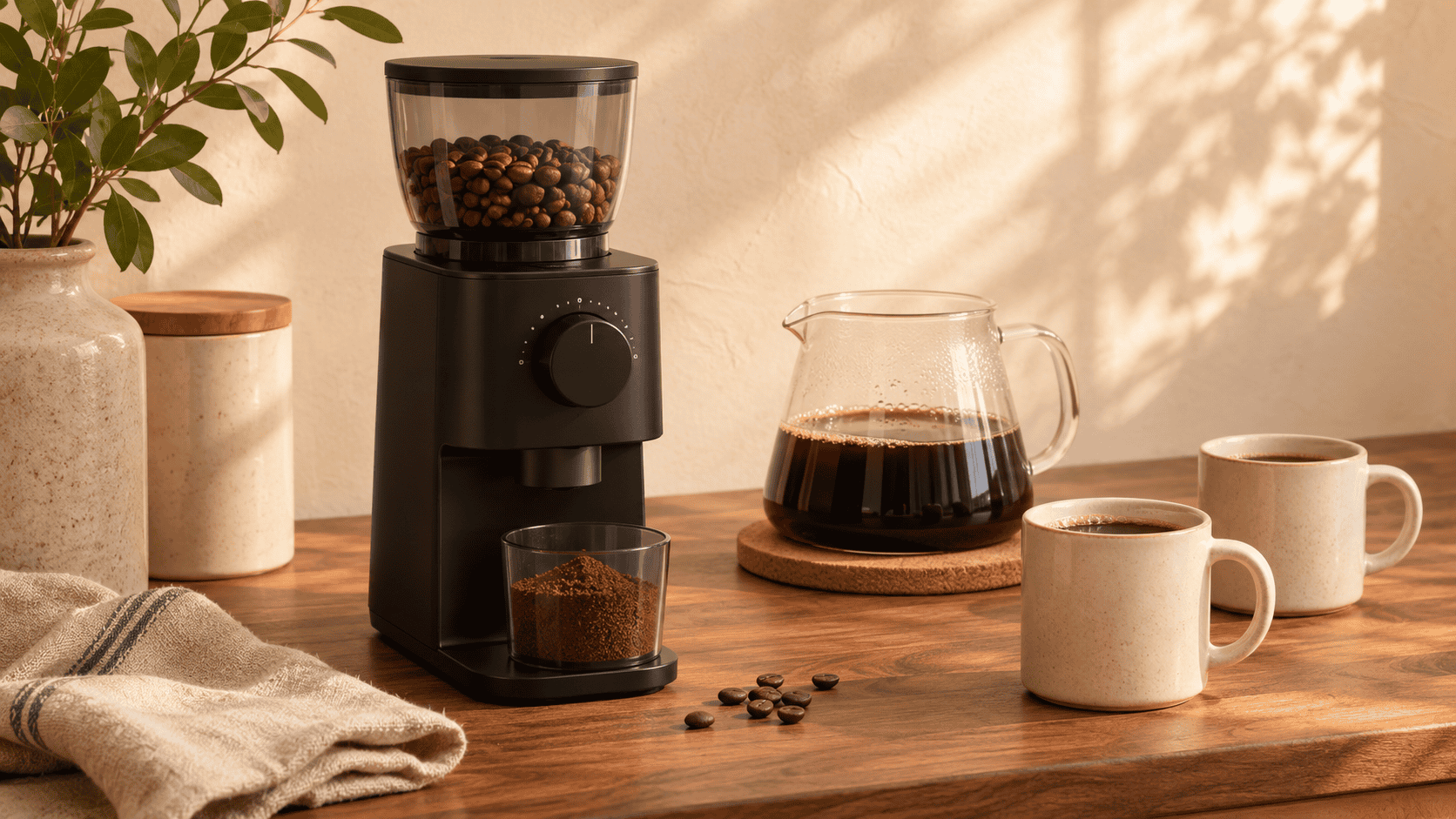
Little changes can be part of the pleasure of making espresso at home. Baratza’s Encore ESP Pro is the grinder we’d choose when you want to move between grind settings freely, rather than settle on the nearest click. Its automatic stopping and built-in timer also make it appealing for a coffee corner you use every day. The simpler Encore ESP makes more sense when you like definite, numbered steps and don’t mind stopping the grinder yourself.
Neither choice needs to turn your morning into a technical project. Think about the coffee you enjoy making and the one small frustration you’d like to remove. The Pro gives you more freedom and a few helpful conveniences; the ESP keeps the controls straightforward. We wouldn’t replace a happy, reliable ESP just because a newer version has arrived.
More room to find your favorite espresso
The Pro’s main attraction is its stepless adjustment. In plain language, you can turn the adjustment to a position between the marked numbers instead of moving from one fixed click to the next. That matters when one espresso setting seems a little too fine and the next seems a little too coarse for the coffee you’re using.
You still decide what tastes right. The grinder gives you room to make a smaller change; it doesn’t decide how your coffee should taste or promise that every shot will land perfectly. We’d find that extra room most useful if you enjoy exploring different beans and keeping a favorite espresso recipe close to hand.
There’s a small tradeoff in that freedom. A click gives your hand a definite stopping point, while a stepless adjustment asks you to pay closer attention to the position. Someone who enjoys tinkering may welcome that. Someone who wants to return to a familiar number and get breakfast moving may prefer the ESP’s simpler feel.
The original ESP keeps things easy to follow
The Encore ESP has 40 settings, with smaller changes in its espresso range and larger changes for filter brewing. You turn the hopper to adjust it, then use the side switch or front pulse button to grind. That’s an approachable arrangement when you want fresh grounds without a screen or a choice of automatic modes.
Its espresso range covers settings 1–20, while 21–40 serves coarser brewing methods. Those numbers describe this model, rather than a recipe that transfers directly to the Pro. The useful buying point is that the ESP already makes room for espresso alongside filter coffee. You don’t need the Pro simply because a coffee machine has joined your kitchen.
We’d lean toward the ESP for a first separate electric grinder when you value clear steps and are happy to keep an eye on the dose. If your coffee life is mainly a pot for breakfast or a weekend press, our OXO burr grinder guide offers another everyday option worth considering.
Do you weigh one coffee at a time?
The Pro gives you two ways to handle the grinding. In Single Dose Mode, you weigh the beans before adding them, start the grinder and let it stop when the hopper is empty. That can be a pleasant match for choosing a different coffee for an afternoon cup without leaving a hopper full of your morning beans.
Timer Mode is the alternative for a more repeatable daily routine. You set a grinding time, with adjustments in tenths of a second, rather than manually deciding when to stop every time. It’s useful when you tend to return to the same coffee and preparation, especially on mornings when your attention is also on toast and finding your keys.
A timer measures time, though, rather than the weight of coffee in your cup. We’d keep a scale nearby when the amount matters to your recipe. A different bean or grind position can call for another adjustment. The convenience is taking over the stopping step, not removing every decision from making coffee.
A tidier place to make the next cup
Ground coffee scattered around a dosing cup can take the shine off an otherwise lovely little setup. The Pro includes anti-static technology designed to reduce that scattering at the chute. We’d count it as a practical reason to consider the newer grinder if tidying the counter is the part you’d most like to make easier.
We wouldn’t read that feature as a promise of a spotless counter. You still need to handle the cup carefully and clean the grinder as directed. The appeal is an extra tool for managing static, rather than another task you need to learn before you can enjoy your coffee.
The ESP includes a dosing cup and a grounds bin, so you can use the collection piece that fits the coffee you’re making. Before settling on a permanent spot, leave yourself room to lift the hopper lid, remove the cup and reach the controls comfortably. A grinder that’s awkward to reach is less inviting to use, however appealing the features sound.
Both grinders can serve more than espresso. The Pro spans fine through coarse grinding, and the ESP’s separate filter range gives you a clear place to start for other methods. That makes either one relevant when the household enjoys an espresso during the week and a larger pot of coffee at the weekend.
Moving back and forth still means finding your way back to the setting for each coffee. A few simple brew notes can save you from starting over. That’s especially helpful with the Pro’s smooth adjustment, where a marked position gives you a reference without supplying a physical click.
If you already have a grinder you like for filter coffee, consider whether a separate espresso setup would make life calmer than changing settings for everyone’s drinks. Neither model needs to replace equipment that’s already doing its job well. The right purchase should fit the coffee you actually make together.
Leave room for the ordinary care
Fresh coffee is a good reason to make space for a grinder; regular cleaning is part of keeping that space pleasant. Follow the instructions for the exact model, unplug before cleaning or removing parts, and keep the motor housing dry. On the ESP, the metal ring burr must not be washed in water because it can rust.
We’d also leave time to become familiar with a new bag of beans rather than expecting your previous setting to suit everything. You don’t need a long lesson in grinding to make this buying decision. You just need to be comfortable with a little adjustment and the care that any electric burr grinder asks of you.
Which would we put in your coffee corner?
We’d choose the Encore ESP Pro for espresso you enjoy fine-tuning, particularly when automatic stopping and help with static would make the daily routine more comfortable. The Encore ESP is our choice for clear, stepped controls and a simpler way to get fresh grounds ready. If your ESP already suits your coffee, keep enjoying it; the Pro is a useful option for a particular need, rather than a reason everyone has to start again.
As an Amazon Associate I earn from qualifying purchases.