
Reviewed and updated: November 10, 2026
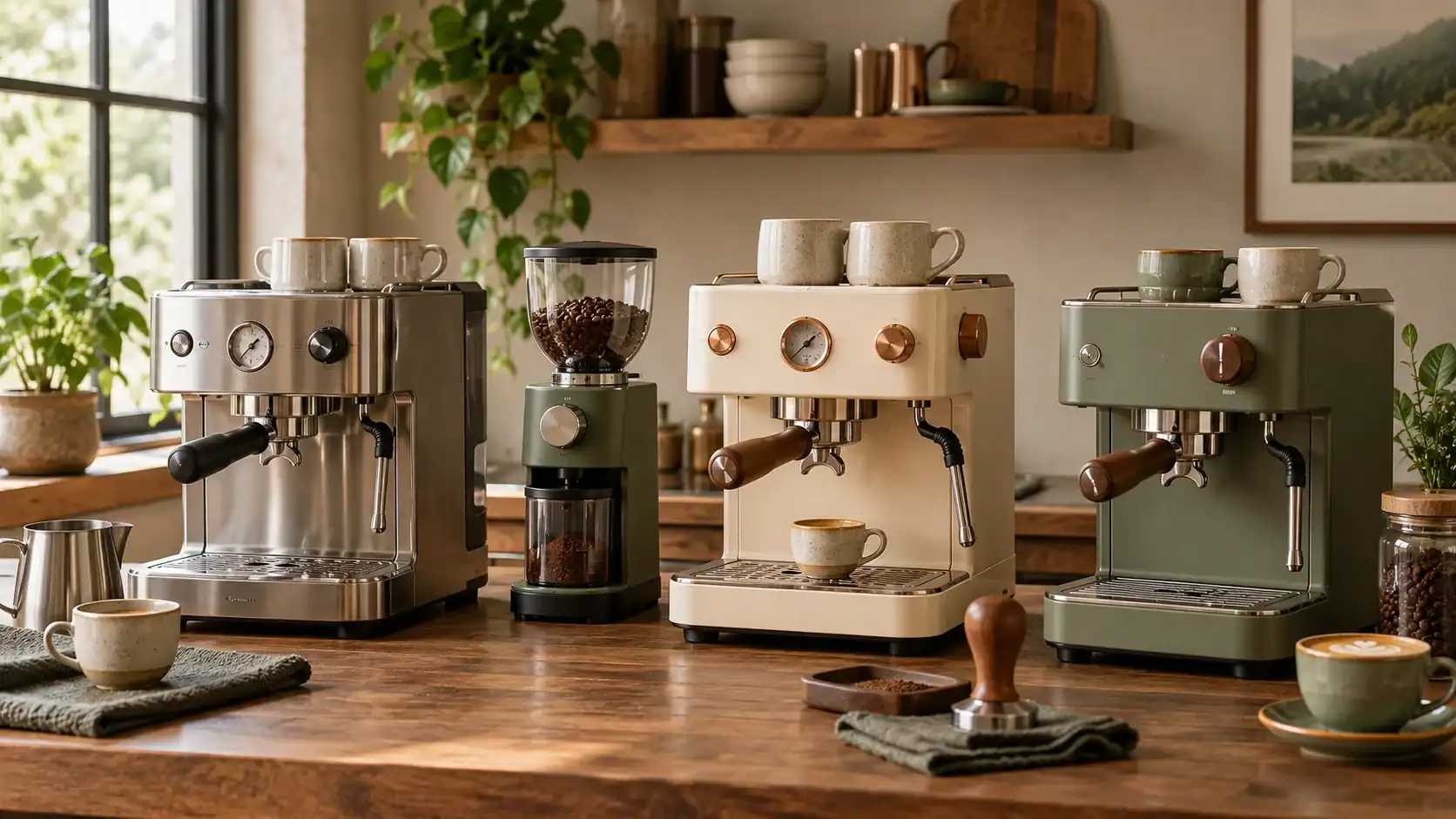
If $500 needs to cover your complete first espresso setup, we would start with the De’Longhi Stilosa and leave room for the coffee equipment you still need. It gives you manual pump espresso and a milk frother without an integrated grinder. The compromise is that you control the shot’s stopping point and steam milk yourself. If you already have a suitable grinder and want milk assistance, the Bambino Plus is worth comparing against your actual checkout total.
Keep that ceiling attached to the whole purchase, not just the machine’s name. A grinder, a milk jug, cleaning supplies and tax can change what fits. We are not treating every option below as a guaranteed complete setup under $500. The useful choice is the one that covers your preferred drinks without leaving an essential part of preparation outside the budget.
You control when the coffee stops, and milk preparation is a separate manual step. The electrical version must suit your home. The matching single- and double-shot filters are part of the coffee setup; a milk pitcher and grinder are separate purchases unless supplied in a kit.
Start with manual control if you want to learn espresso
The Stilosa suits you if preparing coffee is part of the appeal. You fill and tamp its filter, lock the portafilter in place and use a dial to start and stop delivery. Its included single- and double-shot filters let you prepare different small servings without buying an automatic drink menu. A combined spoon/tamper is included, but whole-bean coffee still requires a separate grinder.
That makes the coffee you intend to use part of the decision. Suitable pre-ground coffee can keep the initial setup simpler, while grinding whole beans gives you another piece of equipment to choose and accommodate. We would not fill the budget with a more elaborate machine and then pair it with a grinder that cannot make the adjustments your coffee preparation needs.
The single-shot filter also accepts ESE paper pods under the US instructions. That can be convenient if you want less loose-coffee handling sometimes, but those paper pods are a specific format. They are not K-Cups or Nespresso capsules. Choose it for manual espresso with that additional option, rather than assuming it works with whatever pods you already buy.
Milk assistance is a different priority
We would choose Bambino Plus when milk texture is the task you most want help with and the full purchase fits your spending limit. Its automatic wand mode offers three temperature settings and three texture settings. You use a separate jug and pour the milk into your espresso afterward. It still leaves filling, tamping and cleaning the coffee basket in your hands.
Automatic milk settings reduce one part of the work; you still fill, tamp and clean the coffee basket yourself. The standard Bambino is a different machine and does not have the same automatic milk controls as Bambino Plus.
There is no grinder inside Bambino Plus either. If you already own a suitable one, the comparison becomes easier: you are deciding whether the milk assistance and controls justify the selected machine’s cost within your ceiling. If you need to buy everything at once, do not assume that a machine-only listing leaves enough room for those other items.
The standard Bambino has a different milk system from Bambino Plus. A similar name should not be allowed to decide the purchase. Our milk-reservoir versus Bambino Plus comparison explains how assisted jug steaming differs from a machine that draws milk from an attached container.
Capsules make sense when preparation needs to stay simpler
If you mainly want a short espresso before work and do not want to handle loose grounds, we would consider Nespresso Essenza Mini instead of a portafilter setup. The C30 model uses Original capsules and has programmable espresso and lungo buttons. That removes the separate grinder and tamping stage, but commits your coffee purchases to a compatible capsule format.
Its small body leaves room for other equipment, but milk needs a separate frother and capsule costs remain part of ownership. Original and Vertuo capsules are different systems. A milk frother is a separate part of the setup unless supplied in a bundle.
Essenza Mini does not have an integrated steam wand, so milk drinks require another way to heat or froth milk. Some packages include an Aeroccino frother; the plain machine should not be assumed to include it. That extra appliance belongs in both the spending and space comparison. If you want a machine for black espresso, you may not need to buy it at all.
Original and Vertuo capsules are different systems. We would choose Essenza Mini for its espresso-and-lungo focus, not because it can use every Nespresso capsule or make a large mug from any capsule you select. Our Keurig and Nespresso comparison helps if you are deciding between a mug of coffee and smaller espresso-style servings before choosing the machine.
Space and serving several people change the balance
The C30 Essenza Mini body is only about 3.3 inches wide, making it easier to place in a narrow gap than a broader coffee station. You still need access to its water tank, capsule lever and used-capsule container. Add a frother and the complete arrangement is larger than that width suggests. A compact machine can simplify placement without making every accessory disappear.
A portafilter setup asks for space to work as well as space to sit. You need to remove the handle, empty the grounds and move a milk jug beside the wand. With Stilosa, the boiler also needs the specified cooling process before coffee is made again after steaming. That sequence matters if several people want different drinks, even when the machine looks small enough on the counter.
Include care in the purchase decision
With Stilosa, the frother needs cleaning after milk use, filters need rinsing and the machine needs periodic descaling. Bambino Plus needs wand wiping, purging and its matching cleaning routine too, with hand washing specified for removable parts. We would choose automatic milk for help during preparation, rather than expect it to remove the cleanup afterward.
The capsule machine avoids a loose coffee puck, but you still empty the used capsules and drip tray, keep the water tank clean and follow its descaling instructions. Coffee and compatible capsules remain ongoing purchases whichever route you choose. Compare the actual products you will buy rather than assume one format will automatically save money over another.
For a first setup, we would resist adding a basket of optional tools before you know which preparation steps you value. Get the matching essentials and keep the remaining budget available. A more expensive tamper or accessory bundle cannot compensate for choosing a machine whose milk handling, serving size or coffee format does not suit you.
Our recommendation
Start with Stilosa for an entirely new manual setup, compare Bambino Plus when milk assistance and your existing equipment make it fit, or choose Essenza Mini for capsule simplicity. Confirm the complete current total, including required extras, against your $500 ceiling before buying.
As an Amazon Associate I earn from qualifying purchases.