
Reviewed and updated: November 10, 2026
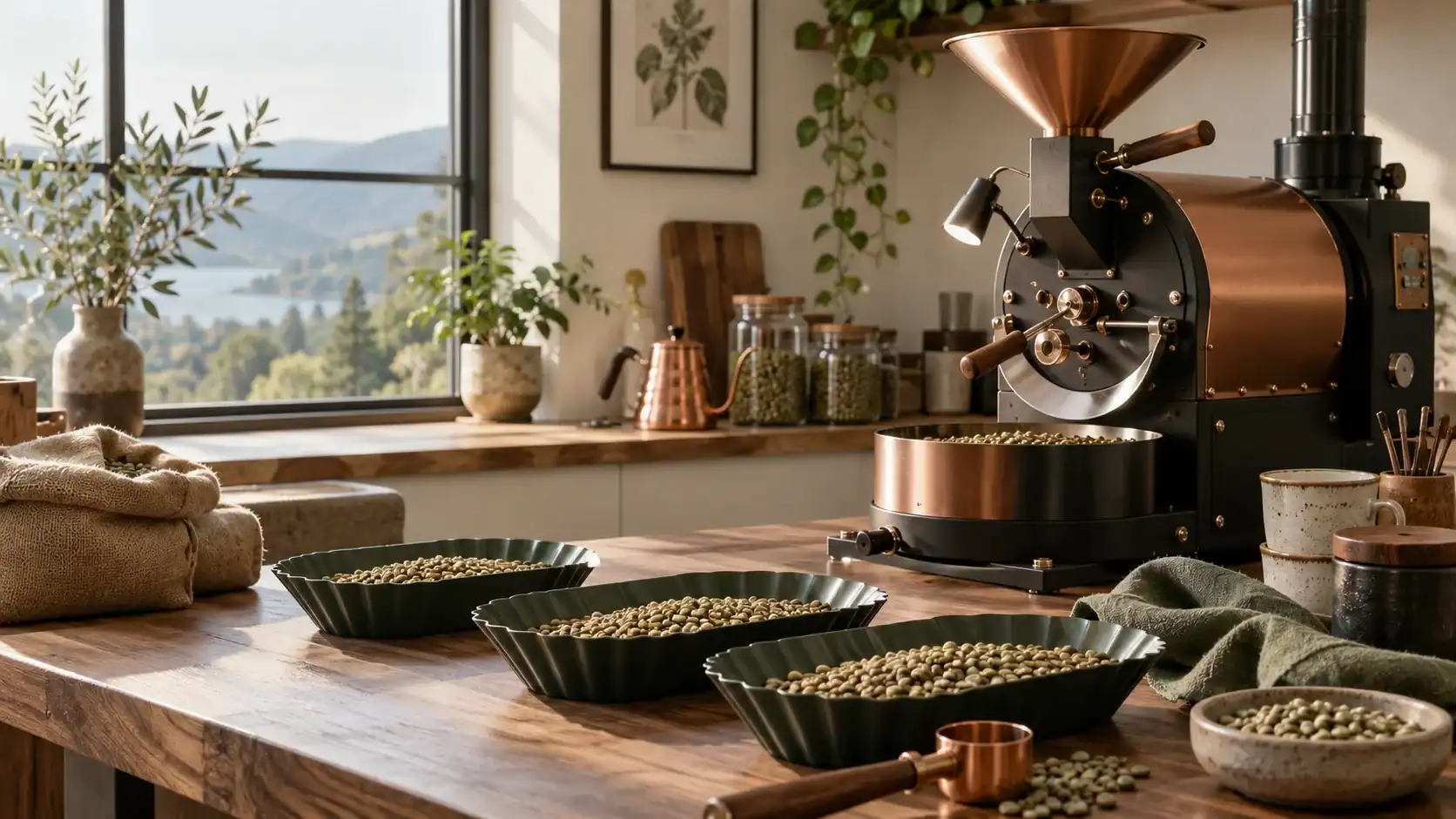
We recommend Fresh Roasted Coffee Organic Colombian unroasted beans if you want to begin with a medium-to-dark roast direction and the supplier’s creamy, almond-and-chocolate description appeals to you. The important compromise is that you are buying a raw ingredient: it must be roasted before grinding, brewing or consuming. We’d choose the same supplier’s Organic Ethiopian Yirgacheffe green coffee when you want a lighter roast with a brighter citrus-and-floral direction instead.
These are two specific starting points for a suitable home roaster, rather than finished coffees you can put straight into a grinder. Choose the flavor direction you want to develop, then buy a quantity that suits your equipment and how often you will roast. A larger bag is not a better purchase if it gives you more of a coffee you have not yet learned to roast or enjoy.
Buy it for a suitable home roaster, not for direct brewing; your roast determines the finished cup. These are green, unroasted Colombian beans; roasted whole beans from the same brand are a different product.
Colombian is our choice for a fuller roast direction
The Organic Colombian product is a washed Arabica coffee, with a supplier recommendation of medium to dark roasting. That gives you a clear reason to start here if your usual preference is a fuller coffee direction rather than a very bright, light-roasted cup. The listed creamy, almond and chocolate notes describe the coffee’s potential after roasting, rather than ingredients added to the green beans.
We would buy a manageable bag of this one coffee before assembling a large selection of origins. Having enough for several appropriately sized roasts lets you revisit the same coffee while learning what your machine does. That is more useful than buying a little of many coffees and changing the raw material every time you make a roast.
A country name does not make every Colombian lot identical. The exact product, processing description and current lot information still matter. If you are replacing a coffee you already enjoyed, match the supplier’s named product rather than assume an unrelated Colombian bag will give the same result. For a first purchase, the stated roast direction is a more helpful guide than a country stereotype.
Organic certification may be relevant to how you choose coffee, but we would not use it as a guarantee of a particular taste or a health benefit. It also does not make a raw coffee ready to brew. The format and the need for roasting remain the same, regardless of which certification appears beside the product name.
Choose Yirgacheffe when you want a lighter, brighter direction
The Organic Ethiopian Yirgacheffe product is also washed Arabica, with the supplier describing lemon, floral and bright characteristics and recommending a light-to-medium roast. We would choose it when those are the qualities you want to explore. It is a concrete alternative to buying the Colombian and then trying to make it fit a very different flavor objective.
It offers a concrete alternative to the Colombian, but deeper roasting can obscure the characteristics you bought it for. These are unroasted Yirgacheffe beans; roasted formats are different products.
A deeper roast can obscure the lighter characteristics that make this choice interesting. If your normal preference is a dark roast with substantial milk, consider whether you really want to pay for a coffee chosen for citrus and floral notes. The Colombian is the more natural starting point for the fuller roast direction; Yirgacheffe makes more sense when preserving that brighter character is part of the goal.
Lemon or floral wording is not a promise that every roast will reveal those notes clearly. Your equipment, roast development and eventual brewing all affect the cup. Use that flavor direction to choose between the coffees, then judge whether your finished roast gives you the lighter character you wanted.
A supplier can offer several regional lots, organic and other selections, and both roasted and unroasted formats. The decision here concerns the named organic green coffee, not every product using the same regional name.
Your roaster’s capacity determines the useful bag size
Before choosing the quantity, compare the bag’s net weight with the batch size your actual roaster allows. A machine’s rated capacity applies to each roast, not to the whole bag you bought. You should be able to divide the purchase into sensible batches without overfilling the roaster or improvising a larger load just to use the coffee faster.
Green weight is also different from the finished roasted weight you will put into your brewer. Roasting removes moisture and changes the beans, so do not compare the purchase as if every gram of green coffee becomes the same weight of roasted coffee. We would choose a bag for several learning batches rather than assume its printed weight predicts a fixed number of drinks.
If you roast infrequently, a smaller available bag can be the more comfortable commitment even when a bulk bag appears attractive per pound. You need somewhere appropriate to store the remaining green coffee and time to use it. Check the supplier’s storage guidance and current package before setting aside a large quantity for a new hobby.
Buy green coffee only if the roasting setup is ready
Home roasting produces heat, smoke and chaff, so suitable ventilation and the exact roaster’s operating requirements are part of this purchase. A bag of beans cannot make an unsuitable room or appliance appropriate for roasting. We would settle the equipment and safe working location first, then buy coffee within the capacity and roasting limits of that setup.
Follow the roaster’s instructions, stay with the process and maintain its chaff collection and cleaning arrangements. Do not bypass a safety control or exceed a batch limit to accommodate a bigger bag. Those requirements can make a smaller, repeatable purchase more useful than a bulk order that encourages longer or larger sessions than your equipment supports.
The supplier explicitly says not to grind, brew or consume these beans unroasted. They are not a green-coffee supplement, a ready-to-eat snack or a substitute for roasted whole beans when you simply want tomorrow’s coffee. If your goal is to open a bag and brew, choose a roasted product in the format your brewer needs.
Confirm the lot and destination before the order
For either choice, look for current product and lot information rather than infer a harvest year from a recurring harvest season. A general calendar describes when coffee may be harvested; it does not identify the age or arrival of the specific bag. If that information is central to your purchase and missing, ask the seller before committing to a large quantity.
Green coffee can also have destination restrictions. Check the seller’s current shipping rules for your address rather than assume that a roasted-coffee delivery history applies to raw beans. Unroasted coffee can have delivery restrictions that differ by destination.
Our recommendation
Choose the Organic Colombian for a medium-to-dark roast direction, or Organic Ethiopian Yirgacheffe for a lighter citrus-and-floral objective. Start with a manageable bag that fits your roaster and repeat the coffee before buying bulk. Green coffee needs to fit your roaster, planned batch size and destination’s delivery rules.
As an Amazon Associate I earn from qualifying purchases.