
What Is a Doppio Espresso? (Updated 2026)
Doppio means a double espresso, but dose and finished volume still vary with the café and recipe.
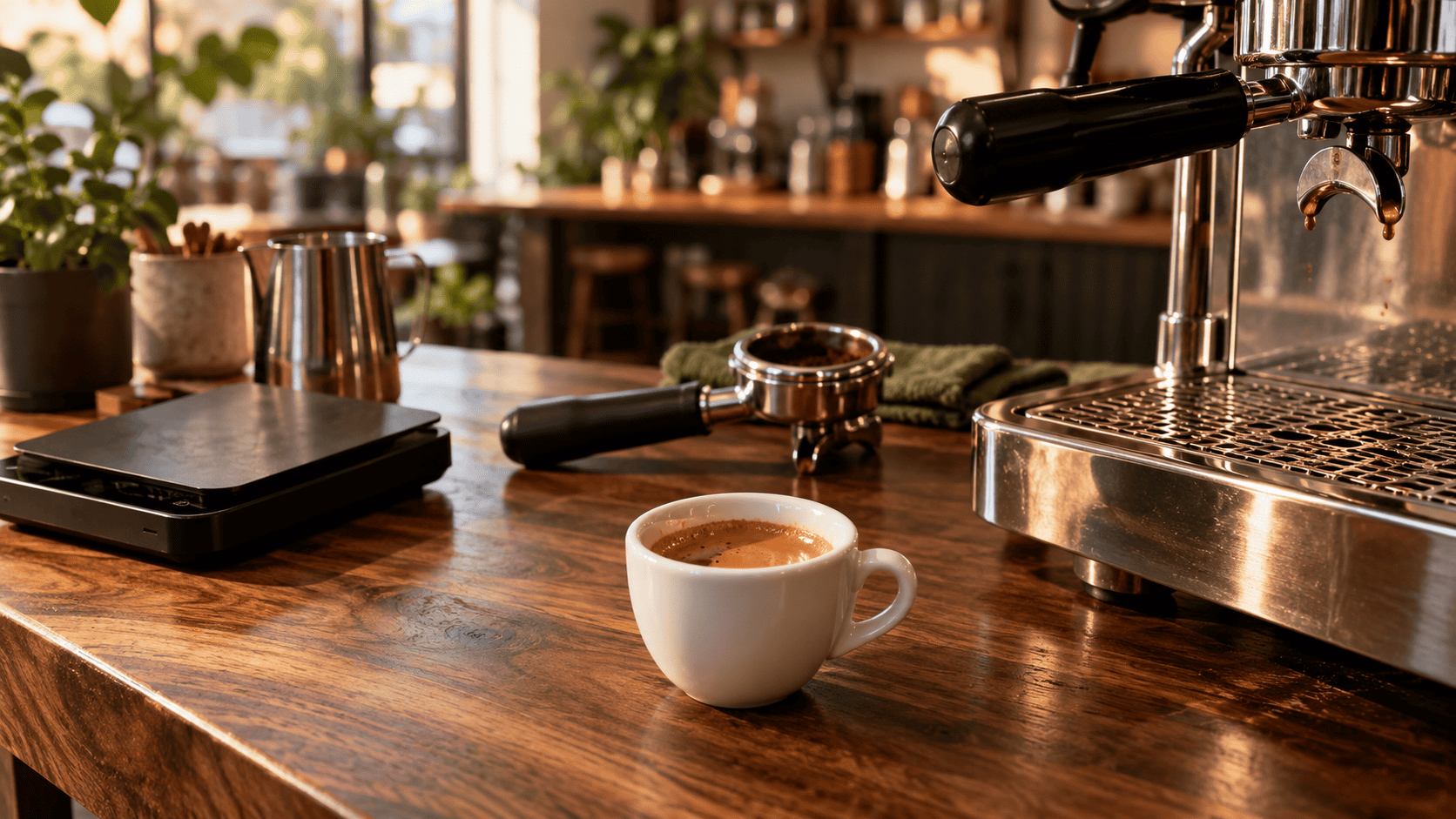
Doppio means a double espresso, but dose and finished volume still vary with the café and recipe. This refreshed guide separates the dependable principle from the details that vary by coffee, equipment, recipe, and personal taste. That distinction matters because coffee language often sounds more exact than it is.
The Italian word doppio means double. In espresso service it distinguishes a double shot from a single, although many specialty cafés now treat the double basket as their normal starting recipe. The useful approach is to begin with a sound baseline, observe the cup or equipment, and make one change at a time. You do not need perfect laboratory control, but you do need enough consistency to know which change produced the result.
What the term means in practice
A doppio is a double espresso. Modern cafés commonly prepare it from a double basket and serve the full extraction as one drink, but the exact dry dose, beverage weight, and volume depend on the coffee, equipment, and house recipe. Treat that as a starting point rather than a rigid promise. Coffee is an agricultural product, recipes differ, and equipment designs create their own boundaries. When a package, brewer manual, café menu, or roaster provides a specific definition, use that information for the product in front of you.
A useful explanation should also say what the answer does not mean. It does not guarantee the same flavor, strength, caffeine, shelf life, or performance in every situation. The goal is to give you a reliable way to make the next decision, then let taste, observation, and manufacturer guidance refine it.
What changes the result
- 1. Dry coffee dose and double-basket capacity.
- 2. Brew ratio, finished beverage weight, and shot time.
- 3. Coffee freshness, roast, grinder, and café terminology.
These variables interact. Changing several at once can make a good result difficult to repeat and a bad result difficult to diagnose. Keep a brief note of the coffee, equipment, amount, time, and outcome. That simple record turns a vague impression into a useful comparison.
Water and freshness deserve special attention in almost every coffee question. Clean water with a balanced mineral level supports extraction, while stale coffee can flatten aroma and make technique changes seem ineffective. Clean equipment prevents old oils and residue from becoming part of the flavor.
A practical method
- Step 1: Ask the café whether its standard espresso is already a double. This keeps the decision observable and makes the next adjustment easier to judge.
- Step 2: Compare recipes by coffee dose and beverage weight rather than crema volume. This keeps the decision observable and makes the next adjustment easier to judge.
- Step 3: Stir the shot before tasting so crema and liquid are integrated. This keeps the decision observable and makes the next adjustment easier to judge.
- Step 4: Adjust grind to reach a balanced extraction instead of chasing a fixed time alone. This keeps the decision observable and makes the next adjustment easier to judge.
After the first attempt, judge the result when it is safe and at a useful tasting temperature. Aroma, sweetness, acidity, bitterness, body, texture, and finish provide more information together than any single visual cue. Repeat the best version before deciding that you have found a permanent setting.
Common mistakes to avoid
- Counting two portafilter spouts as proof of two separate shots. Correct it by returning to the basic method, checking one variable, and comparing the next result.
- Assuming every doppio contains the same caffeine. Correct it by returning to the basic method, checking one variable, and comparing the next result.
- Using cup volume alone when crema changes the visible level. Correct it by returning to the basic method, checking one variable, and comparing the next result.
Another common mistake is treating an informal coffee term as a regulated standard. Roast names, café drinks, serving sizes, grinder numbers, and strength labels often vary. Specific weights, ratios, model instructions, and ingredient lists are more dependable than assumptions based on a name.
How this fits with other coffee decisions
This topic connects naturally with Why Don’t I Like Coffee?, Is Dark Roast Coffee More Bitter?, Why Is My Espresso Sour? Causes and Fixes, What Is Italian Roast Coffee?. Those guides help you move from a single answer to a complete routine, whether you are choosing coffee, measuring a recipe, troubleshooting flavor, or caring for equipment.
Use the related guides when you need to compare measurements, brew methods, storage, or equipment care. Start with the page that matches the decision in front of you, keep the rest of the setup consistent, and follow the current manufacturer instructions whenever a specific machine, filter, grinder, or accessory sets a safety or compatibility limit.
Sources and further reading
Frequently asked questions
How many ounces is a doppio?
Traditional references often place a double near 50 to 70 milliliters, but modern recipes vary widely. Use the product instructions or café recipe when it defines the term more narrowly.
Is a doppio stronger than drip coffee?
It is more concentrated, while total caffeine depends on dose and serving size. Use the product instructions or café recipe when it defines the term more narrowly.
Can it be served over ice?
Yes, although ice dilution changes temperature and perceived strength. Use the product instructions or café recipe when it defines the term more narrowly.
The takeaway
A doppio is a double espresso. Modern cafés commonly prepare it from a double basket and serve the full extraction as one drink, but the exact dry dose, beverage weight, and volume depend on the coffee, equipment, and house recipe. Begin with the practical method above, keep the setup consistent, and make small changes based on what you observe. That produces a more dependable answer than chasing a universal rule that ignores the coffee or equipment in front of you.
Reviewed October 10, 2026. This page is educational and contains no forced shopping links. The existing URL is preserved, the information has been rewritten for clarity, and the related reading points to other relevant pages on Fueled By Coffee.
A simple review checklist
Before repeating the process, confirm that the equipment is clean, the coffee or ingredient is fresh, measurements are consistent, and the chosen method matches the intended result. Note what changed and what stayed constant. If the result improves, repeat it once before making another adjustment.
When a safety, compatibility, storage, or maintenance question depends on a specific product, the manufacturer’s current instructions take priority. Stop using damaged equipment, avoid improvising with pressure or heat, and replace seals, filters, or worn parts only with compatible components.