

The origin of coffee lies behind every one of the 400 billion cups we drink globally each year. Many might assume coffee has always been part of human civilization, yet each morning brew tells centuries of fascinating history.
Coffee ranks as the second most traded commodity worldwide, right after petroleum. The 19th century saw coffee become one of the world’s most profitable export crops. The story of coffee’s origins takes us on a trip across continents and cultures. Scientists have found fossilized beans next to ancient human remains in Ethiopia. Coffee houses exploded in popularity in England, with more than 3,000 establishments by 1675. The tale of coffee’s discovery weaves together myth, science, and cultural revolution.
This piece will reveal the true origins of your morning cup and separate fact from the enchanting legends that have endured through centuries.
The Legend of Kaldi: Where Did Coffee Come From Originally?
The story of coffee begins in Ethiopia’s ancient highlands, where a simple goat herder stumbled upon what would become one of the world’s most beloved drinks. This origin story has fascinated coffee lovers for centuries and beautifully weaves together history and folklore. Coffee from the EthIopian Highlands is described as floral and having a citrusy brightness with slight sweet berry flavors. You can discover a new taste experience with Ethiopian Coffees from Amazon.
The story of Kaldi and his energetic goats
Legend tells us about Kaldi, a young Ethiopian goat herder who first found that there was coffee’s energizing effects around 850 CE. His ordinary day in Ethiopia’s mountains turned extraordinary when he noticed something strange – his goats were prancing, frolicking, and dancing with newfound energy. Puzzled, he watched them closely and saw them nibbling bright red berries from a shrub he’d never noticed before.
His curiosity took over. After seeing his goats stay unusually energetic and awake all night, Kaldi tried these mysterious berries himself. He soon felt the same rush of energy his goats had shown. The effects amazed him so much that he had to tell others about his findings.
This discovery happened in the ancient kingdom of Kaffa, which might explain coffee’s name. Some say the ancestors of today’s Kafficho people were the first ones to notice how the coffee plant could energize people.
How monks turned berries into a drink
Kaldi gathered some berries and rushed to share his discovery at the nearest monastery. The head monk’s original reaction was skepticism. He worried these strange fruits might be the devil’s work. He threw the berries into the fire.
Something unexpected happened next. A wonderful smell filled the monastery as the berries burned, and other monks couldn’t help but notice. The aroma was so good that they pulled the roasted beans from the embers. They ground these roasted beans and mixed them with hot water, creating what many would call it the world’s first cup of coffe.
The monks tasted this new drink and found that there was something special – it helped them stay alert during long nights of prayer and study. The brew became an important part of monastery life and helped them focus during evening prayers. Word about this energizing drink spread beyond the monastery walls.
Why this legend still matters today
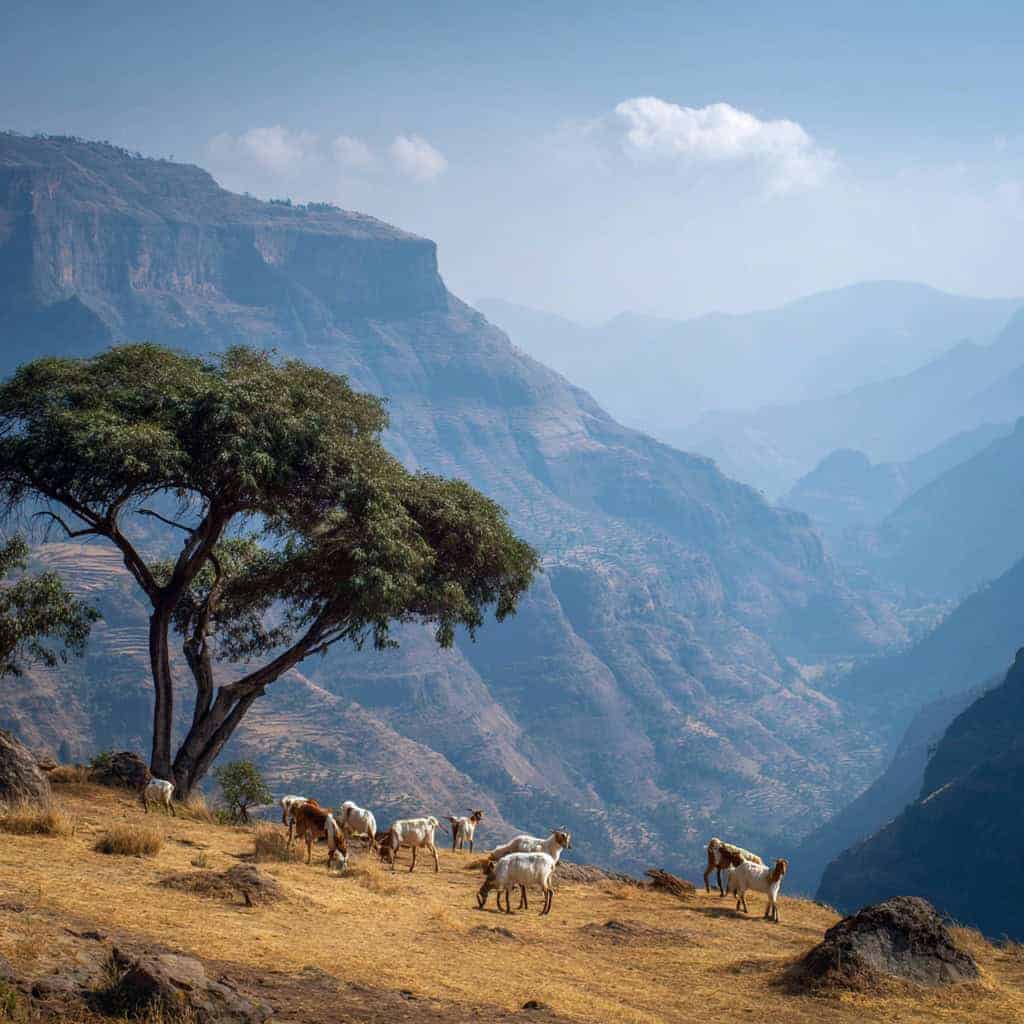 The Kaldi story first appeared in writing in 1671, through Faustus Nairon, a Rome-based Maronite professor – about 800 years after it supposedly happened. Notwithstanding that, the legend captures everything in coffee’s discovery: people noticing and trying out its natural stimulating effects.
Most experts believe the nomadic Oromo people were actually the first to discover coffee’s energizing properties. Whatever its historical accuracy, Kaldi’s legend lives on because it reflects coffee’s deep roots in Ethiopian culture.
Coffee remains central to Ethiopian life today. “Buna dabo naw” or “Coffee is our bread” shows how important it is. The traditional Ethiopian coffee ceremony can last hours and shows how coffee helps to promote community and hospitality.
Kaldi’s tale of dancing goats connects us to coffee’s ancient origins. Behind every modern coffee shop stands centuries of tradition, chance discoveries, and the simple joy of finding something that makes us feel more alive.
Coffee’s First Real Home: The Arabian Peninsula
Coffee was born in Ethiopia, but the Arabian Peninsula raised it to greatness. The coffee plant crossed the Red Sea from Ethiopia to Yemen in the 15th century. There, it changed from a wild berry into the drink we know today.
How was coffee discovered by Sufi monks?
The earliest records of coffee drinking come from Yemen, not Ethiopia. Sufi monks took to the bean with good reason too. Sufi monasteries in Yemen started growing coffee plants from Ethiopia around 1400 CE. These Islamic mystics found that coffee helped them stay alert during their nighttime prayers and meditation.
Many credit Sheik Omar, a Yemeni Sufi, as the first person to make coffee into a drink. He supposedly boiled the berries after seeing birds eat them with unusual energy. The most reliable historical account points to Sheik Jamal-al-Din al-Dhabhani. He brought coffee to Aden, Yemen in the early 15th century after seeing it in Ethiopia.
The Yemeni port of Mocha became the coffee capital of the world for almost 200 years. Arabian farmers created advanced growing methods and were the first to roast and grind coffee beans before brewing. These techniques turned the raw cherry into what we now call coffee.
The rise of qahveh khaneh (coffee houses)
Coffee spread through the Middle East by the late 15th century. It reached Mecca, Cairo, and finally Constantinople (modern Istanbul). This spread led to something revolutionary—the coffee house, or qahveh khaneh in Arabic.
Mecca saw its first coffee houses in 1511, and they spread faster across the Arabian Peninsula. These places offered more than just coffee. They became lively spots where people talked, shared ideas, and enjoyed entertainment. Men would meet to drink coffee, play chess, discuss poetry, and share news.
Ottoman historian İbrahim Peçevi wrote that “learned persons” would gather at these coffee houses to “converse on poetical and historical subjects.” People started calling the coffee house the “School of the Wise” because it became such an important part of society.
Coffee’s story in the Arabian Peninsula became deeply connected with spiritual practices and social customs. People first valued it to help them stay awake during religious devotion. Soon, it gained its own spiritual importance. Sufis praised it as a gift from above that made their dhikr—rhythmic chanting ceremonies—easier.
Not everyone liked this new drink. Conservative imams in Mecca banned coffee briefly in 1511. They worried about its stimulating effects and how coffee houses let people exchange ideas freely. The governor of Mecca, who loved coffee himself, quickly ended the ban.
Coffee houses grew so influential that people called them “mirrors of the world” because they showed every part of Arabian society. These places served as spots where merchants did business, scholars debated philosophy, and regular people talked politics.
Coffee eventually made its way to Europe, starting its next big chapter. But it was in these early Arabian coffee houses where coffee first showed its amazing power to stimulate not just bodies, but minds and societies too.
Coffee completed its European transformation in less than a century. What started as demonic suspicion had become a cultural obsession.
Myths, Facts, and the Real Discovery of Coffee
The true story of coffee goes beyond tales of dancing goats and mystical monks. Its history reveals a more complex picture than popular legends suggest. The beloved tale of Kaldi and his energetic goats didn’t appear in writing until 1671. A Roman scholar Faustus Nairon documented it about 800 years after it supposedly happened.
The Oromo tribe and early coffee use
Ethiopia’s indigenous Oromo people likely started using coffee around the 10th century AD. They didn’t drink it like we do today. Their method was unique – they ground coffee cherries with animal fat to make “energy balls.” Warriors carried these during long trips. British explorers saw this protein-rich tradition still alive in the 18th century.
The Oromo’s origin story adds another layer to coffee’s history. They believe their sky god Waaqa cried over an innocent man’s grave after wrongfully punishing him. The first coffee plant grew from these divine tears.
Why legends like Kaldi endure
Historians keep finding new facts about coffee’s origins, but mythological stories remain popular. These stories capture coffee’s essential nature. Kaldi’s legend lives on because it shows coffee’s magical energizing effects and human curiosity about unusual natural events.
Modern coffee culture connects to ancient traditions through these stories, especially in Ethiopia where coffee means more than just a drink. Coffee remains central to the Oromo’s spiritual practices. They perform ceremonies like “buna qalla” associated with fertility, health, and blessings.
Conclusion
Coffee means more than just our morning ritual. It represents an amazing experience that spans continents, cultures, and centuries. Each cup tells a story that blends mythology with historical fact, from its Ethiopian roots to its position today as the world’s second most traded commodity.
The captivating story of Kaldi and his dancing goats might be just a legend. In spite of that, it captures how people first found that there was a plant with extraordinary properties. Research shows humans and coffee share an older connection. Ethiopia’s Oromo people were the first to utilize its energizing effects through methods quite different from what we use today.
The Arabian Peninsula changed coffee forever. Sufi monks developed better ways to grow it and created roasting methods. They built the first coffee houses – spaces that encouraged intellectual exchange and social connections. These places became “mirrors of the world” and with good reason too.
Coffee links us to both our modern world and ancient customs. Ethiopian coffee ceremonies still follow centuries-old rituals. It does more than just wake us up – it brings together different cultures across the globe.
We might never know who first found coffee’s energizing properties. Maybe that mystery makes it even more special. Coffee shows us how many of our daily pleasures come from chance findings, cultural sharing, and human creativity over hundreds of generations.
Your morning coffee connects you to a tradition older than most religions. It links you to countless human stories through time and space. The path from wild Ethiopian berry to your cup shows one of humanity’s most successful cultural exchanges – a legacy that lives on with every pot we brew.