
Reviewed and updated: November 10, 2026
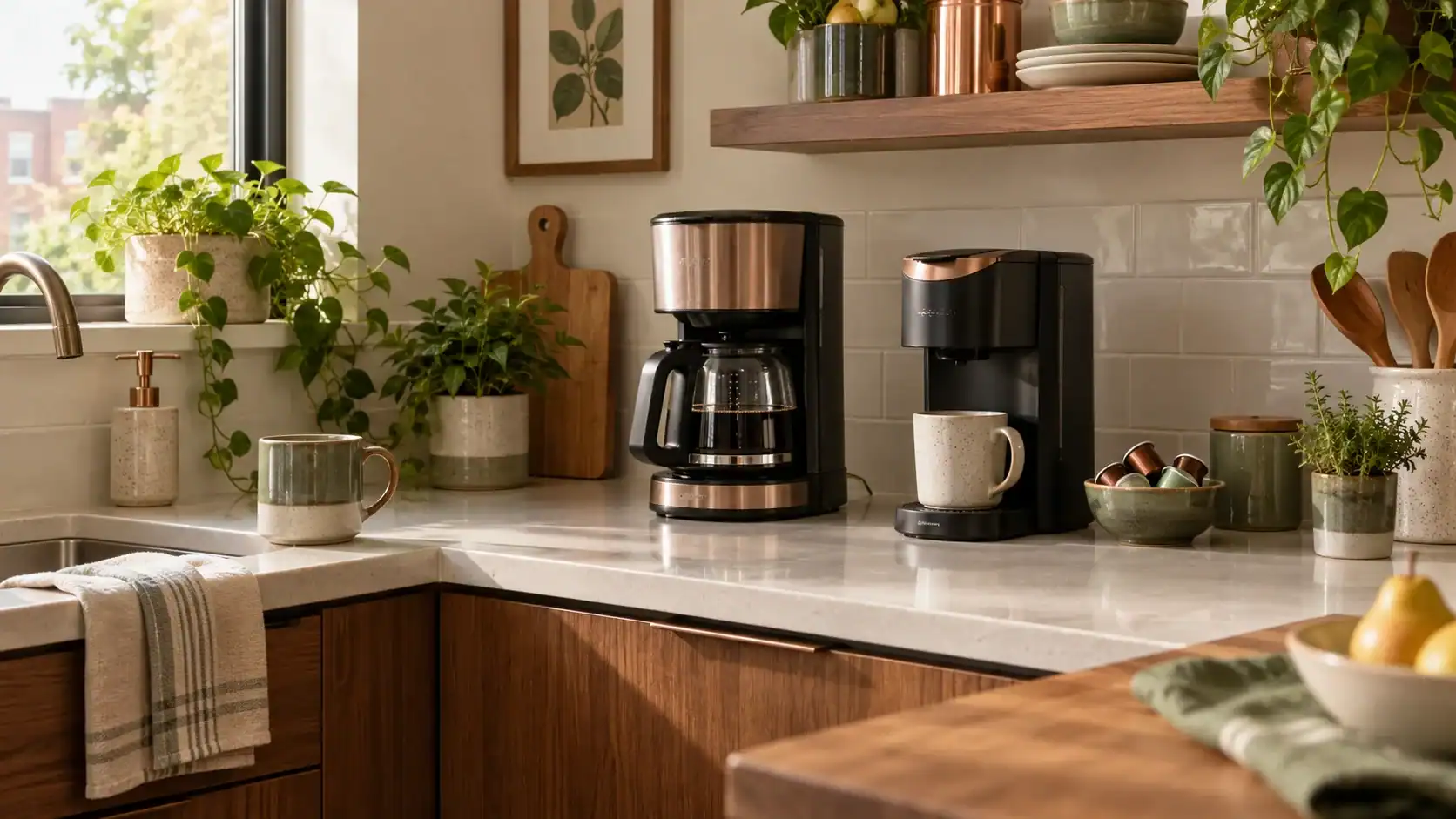
We recommend Cuisinart DCC-3200NAS for an Airbnb coffee station when your guests are likely to share breakfast and want a familiar pot of ground coffee. Its programmable start and glass carafe suit several cups served together. The compromise is that someone still needs to measure water and grounds correctly. For a smaller place where guests want separate coffees at different times, we’d choose Keurig K-Mini Plus and accept the cost and storage of individual K-Cups.
Start with how coffee will be served in your property, rather than how impressive the machine looks in a listing photo. A shared pot and a single-serve brewer solve different morning problems. The better choice is the one whose serving format, supplies and care you can explain clearly and keep ready between stays.
Its glass carafe makes a batch easy to share, while guests still need clear guidance on water, grounds and the correct filter. Similar Cuisinart names can describe different machines; this recommendation is for DCC-3200NAS with its matching carafe and filter parts.
A shared pot makes sense when breakfast happens together
The Cuisinart’s 14-cup designation gives you a larger household carafe, but it does not mean fourteen full travel mugs. Use the carafe markings and the size of the cups you provide to judge whether one batch fits the likely breakfast group. A generous mug can use several of the machine’s marked cups, so sleeping capacity alone is a poor shortcut for choosing a brewer.
For a family eating together, pouring from one pot avoids making every person wait for a separate pod cycle. You can supply one clearly identified ground coffee and a scoop or simple measuring guidance. This format also leaves room for guests to bring their preferred ground coffee, without needing to match a capsule system before they arrive.
The programmable start is useful for someone who wants to prepare the machine for the next morning, while the smaller-batch mode gives a couple an option besides a full pot. Those controls are helpful when your instructions are short and specific. We would not make the guest experience depend on exploring every setting or working out whether the small-batch button automatically measures the water and grounds.
Its warming plate keeps the finished carafe on heat, with an adjustable automatic-off period. That can suit refills around one breakfast, but it is less attractive if the next coffee drinker arrives hours later. We would choose the shared-pot format for overlapping demand, rather than leave a large batch warming all morning to cover several unrelated schedules.
Individual pods are simpler when each guest wants a different cup
K-Mini Plus is a better fit when one or two people want coffee independently and you prefer to provide individual K-Cup choices. It brews a single serving, so someone can select regular or decaf without changing the coffee in a shared basket. You trade the communal pot for a separate preparation each time another cup is wanted.
We would choose K-Mini Plus for a smaller household that wants separate K-Cup drinks rather than a communal pot. The removable one-cup reservoir and automatic shutoff suit that format, but every serving needs fresh water and a new pod.
The removable reservoir holds water for one cup, with fresh water added for each brew. That is an important distinction if you expect a large refillable tank that will serve the whole property. The small machine takes less than five inches of counter width, but a group still has to repeat the fill-and-brew process for successive cups.
Its automatic shutoff is set for 90 seconds after brewing, and the Strong button offers another brewing option. We would value the compact serving format more than the extra button in a guest setting. Auto-off is useful, but it does not replace a suitable location, safe electrical connection or the operating instructions supplied with the machine.
Choose K-Cup supplies for this brewer, rather than Nespresso Original or Vertuo capsules. Our Nespresso versus Keurig comparison explains the drink-format difference if you are deciding between espresso-sized capsules and mug coffee. For this station, compatibility should be obvious from the coffee you stock and the name you use in your guest instructions.
The supplies change the real convenience of the machine
With Cuisinart, you can use its gold-tone grounds filter or an appropriate number-four paper filter, following the manual rather than stacking both together. A reusable filter avoids running out of paper, but someone has to empty and wash it. Paper makes removing the used grounds straightforward, while you take on keeping the correct filters available.
The gold-tone filter can let some fine particles into the carafe, so paper may be the more comfortable choice if you want a familiar filtered cup and simple grounds disposal. Either way, clearly identify the filter arrangement you have provided. The included charcoal water filter is a separate part of machine care, not a substitute for the grounds filter.
Pods reduce loose-coffee measuring, but each cup uses a compatible pod and creates another used container to dispose of. Check the ongoing supply cost against how much coffee you intend to provide. We would not assume that a compact pod brewer is automatically cheaper to run, or that providing a machine alone is enough when the required coffee is not easy for guests to identify.
Choose a station you can inspect and clean between stays
The shared pot gives you a glass carafe, lid and removable brew basket to inspect. Those removable Cuisinart parts can be cleaned on the upper dishwasher rack as directed, while the machine’s body must not be immersed. The warming plate and carafe are additional surfaces to keep clear of old coffee. These are practical maintenance tasks, rather than reasons to assume the brewer cleans itself.
The pod machine removes the communal carafe but still needs reservoir, drip-tray and dispensing-area care. Used pods should not be left inside between stays, and mineral buildup still calls for the exact model’s descaling process. We would choose the format your turnover arrangements can reliably maintain, rather than assume that one serving at a time means there is no internal water system to care for.
For either machine, leave room to fill it without lifting it while hot, open the brewing area and remove the washable parts. Put supplies where they are easy to recognize without crowding the appliance. The Cuisinart needs working clearance above its lid; K-Mini Plus needs less width, but its repeated water filling should still be comfortable at the counter you actually have.
Before using a household brewer in a rental, confirm that its intended use, warranty and care requirements fit your setting. We would not treat either recommendation as a commercial-equipment certification, a promise of rental warranty coverage or an Airbnb endorsement. If you need equipment for continuous high-volume service, that requirement deserves a different purchase from a small household breakfast station.
Our recommendation
Choose Cuisinart DCC-3200NAS for guests sharing a breakfast pot and a station stocked with ground coffee and the right filter. Choose K-Mini Plus for separate K-Cup drinks when repeating the water fill is acceptable. Choose the serving format your property can support consistently.
As an Amazon Associate I earn from qualifying purchases.