
Reviewed and updated: November 9, 2026
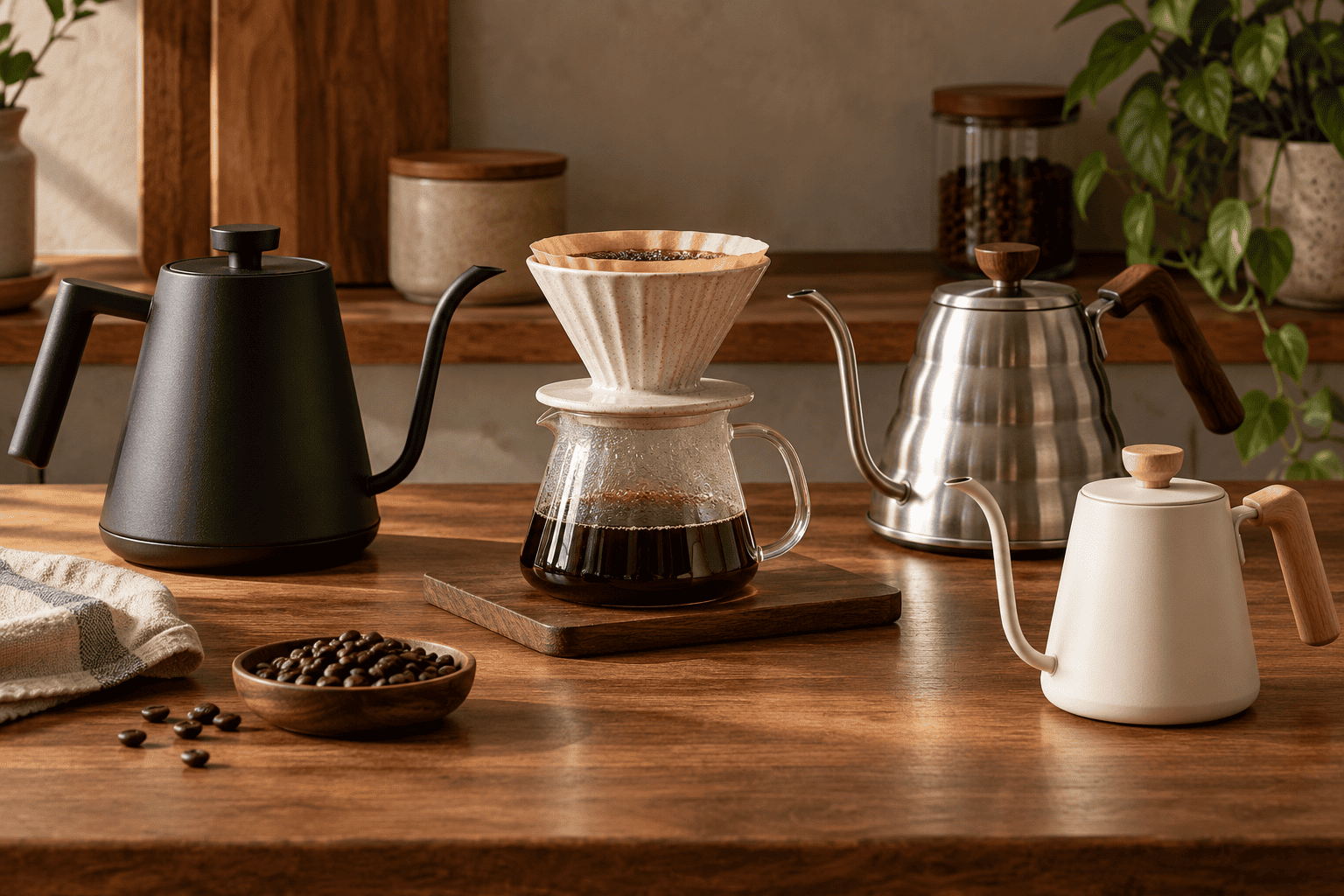
We recommend the Bonavita 1.0L Variable Temperature Kettle when you want direct buttons, temperature presets and a hold function for a straightforward pour-over station. We’d choose the Fellow Stagg EKG Pro when scheduling and a richer settings menu are features you’ll use. Compare OXO’s pour-over kettle if you prefer a temperature dial and built-in brew timing.
All three combine electric heating with a gooseneck spout, so the useful differences are in the controls and the way they fit your coffee preparation. We wouldn’t buy the longest feature list by default. Choose the interface you’ll be happy to operate before your first coffee, with enough water for your recipe and a comfortable place for the base.
The Bonavita gives you a one-liter kettle with temperature presets, one-degree adjustment and a separate hold button. We’d choose it when you want to select a temperature and carry on brewing without exploring a larger menu. Its set range runs from 140°F to 212°F; the hold function covers 140°F to 208°F for up to 60 minutes.
That distinction matters if you expect holding and boiling to be the same setting. For ordinary brewing within its hold range, the useful benefit is keeping suitable hot water available while you organize a manual coffee. We would value that direct control more than an advanced feature that doesn’t change the way you make your usual drink.
The tradeoff is fewer of the Stagg Pro’s menu options. If scheduled heating and configurable on-device guidance appeal to you, compare the Fellow before deciding. If those functions sound like things you would set once and ignore, the Bonavita’s simpler control arrangement is a good reason to keep it on the shortlist rather than dismiss it for having fewer features.
Stagg EKG Pro: our pick for useful extra controls
The 0.9 L Stagg Pro offers a color display, scheduling, a brew stopwatch and adjustable hold periods of 15, 30, 45 or 60 minutes. We’d choose it if that flexibility supports the way you brew. Scheduling, for example, is relevant when preparing the kettle in advance is already part of your morning, rather than a feature you will never remember to use.
The menu also includes guide settings and choices such as temperature units and chime volume. Those can make an appliance feel more suited to your preferences, but they introduce settings to learn. We would choose the Pro because those controls are useful to you, rather than assume the more elaborate interface will make every coffee taste better than a straightforward kettle.
Its updater app supplies firmware updates rather than remote kettle control, and it isn’t required for ordinary use. Don’t buy it expecting to change the temperature or switch the kettle on from your phone. The meaningful purchase is the on-device control system. The Pro Studio adds different base materials and finish details, which we would weigh as a design preference rather than a promise of a better pour.
OXO: our dial-control alternative
The OXO’s twist dial selects temperatures from 104°F to 212°F, with a 30-minute hold once the water is ready. A built-in timer supports the brewing step as well as heating. We’d compare it if you prefer turning a dial to using a row of temperature buttons, and want the kettle’s controls to stay focused on the immediate coffee preparation.
The relevant model is the stainless steel pour-over kettle, 8717100. OXO’s glass adjustable-temperature kettle is a different appliance with a different spout and capacity. We’d make that distinction before ordering because temperature control alone doesn’t establish a gooseneck pouring arrangement. The kettle should match the job that brought you to this guide.
Will a gooseneck change the part you care about?
A narrow spout is useful when you want to direct a controlled stream during manual brewing. That is a real reason to choose a pour-over kettle. It isn’t a reason everyone needs to replace a heater that already works. If you make coffee in an automatic machine and mainly use the kettle for general kitchen tasks, a conventional spout may be the more convenient shape.
If you like your existing heater but want a separate pouring vessel, the Hario AIR is another approach for small recipes. It has a 350 mL practical capacity and requires transferring hot water first. We’d consider that focused addition before replacing a useful kettle when heating and temperature control aren’t the parts you want to change.
Choose capacity around the complete brew
The water you need can include filter rinsing and warming the brewer as well as the amount used for coffee. Compare the full recipe with the kettle’s permitted minimum and maximum, rather than buy around an informal cup count. A smaller fill can be comfortable to handle, while a shared brew may need more room than a single drink suggests.
We wouldn’t declare one kettle universally best to hold without considering your grip and normal fill. The spout, handle and water weight work together. Favor a shape you can lift and pour comfortably, and allow room for the spout beside a wall or shelf. A useful temperature display doesn’t compensate for an awkward position on the counter.
Include everyday care in the decision
These are electric water kettles, with powered bases that must stay dry. They aren’t stovetop vessels, and hot milk or brewed coffee doesn’t belong inside them. Regular descaling is part of ownership, with the exact maker’s instructions controlling the method. We’d choose a position where filling, returning and cleaning the kettle feel straightforward rather than squeeze a base into an unsuitable gap.
A hold function is convenient during brewing, not a reason to ignore hot-water handling or the supplied supervision guidance. Keep the lid secure, respect the fill lines and lift by the handle. Those requirements belong with whichever interface you choose; paying for more controls doesn’t remove the ordinary care an electric kettle needs.
Which would we buy?
Choose Bonavita for direct temperature and hold buttons, Stagg EKG Pro for scheduling and configurable controls, or OXO for a dial-led heating and timing arrangement. We’d decide between them on those everyday differences, with capacity and handling settled before appearance. You don’t need features you’ll never use to make a repeatable manual coffee.
The regional electrical version must suit your home. Buy the controls that make your existing preparation easier, then keep the brewing choices focused on the coffee you enjoy.
As an Amazon Associate I earn from qualifying purchases.