
Reviewed and updated: October 20, 2026
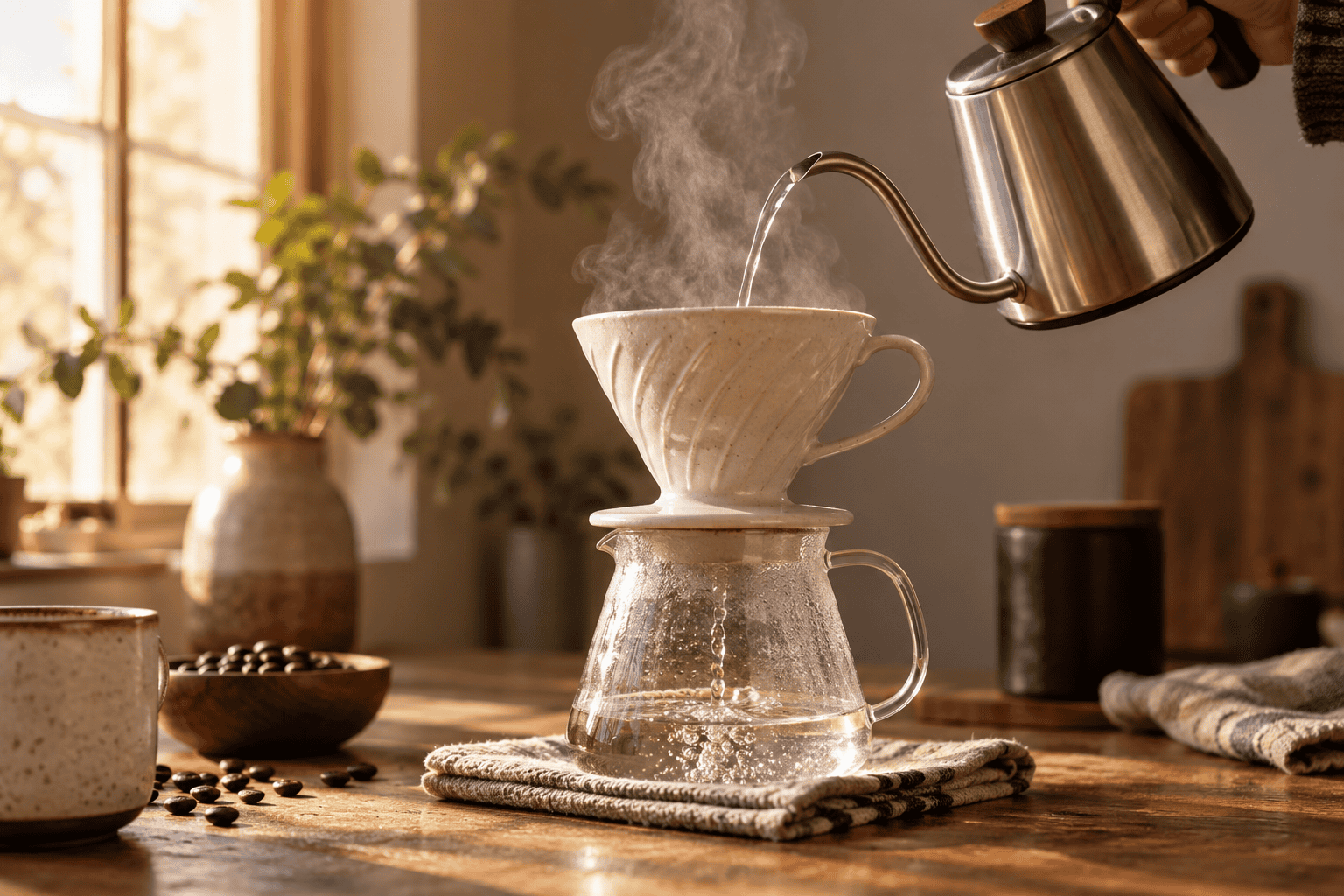
Preheating can make a brewing setup more thermally stable, but it does not require filling every vessel with fresh hot water. A planned sequence lets one small amount do several jobs.
This guide was reviewed against current official product information where a model is discussed. Specifications and packages can change, so verify the exact label or manufacturer page before acting.
Know what needs preheating
The brewer, filter, server, and cup can each absorb heat, but their materials behave differently. Thick ceramic needs more energy than thin glass or plastic. An insulated carafe may have its own guidance. Preheat the parts that materially affect the brew or serving temperature rather than every object on the counter.
Heat only the water you will use
Measure brew water plus a modest rinse and preheat allowance before turning on the kettle. Avoid filling to maximum by habit. The exact amount depends on brewer size, filter type, vessel material, and whether the water can be reused safely. Record a successful amount in brew notes so tomorrow's routine starts closer.
Use one rinse for several jobs
For a pour-over, filter-rinse water can warm the dripper and server at the same time. Swirl carefully, then transfer suitable hot water to the cup before brewing. Keep hands away from steam and hot glass, and pour to the sink if the manufacturer warns against moving or reusing the water in that way.
Preheat in the right order
Warm the slowest, heaviest item first, then the brewer and cup closer to brewing. Leaving a cup full of hot water for a long time can waste heat without improving the final drink. A simple order—server, brewer, cup, then grounds—reduces waiting and keeps the workflow repeatable.
Respect filter and material guidance
Paper filters often benefit from rinsing for fit and to remove loose paper dust, but some brewers or specialty filters use different instructions. Never pour boiling water into glass that is not rated for thermal shock. Avoid sudden temperature changes, cracked ceramics, and plastic outside its stated temperature range.
Reuse water only for a sensible purpose
Clean preheat water can sometimes warm another vessel or become cleaning water after it cools. Water that has passed through a paper filter may contain paper fibers and should not automatically return to the kettle. Do not save warm standing water for drinking later, and never mix it into a reservoir against appliance guidance.
Test whether preheating helps
Brew the same coffee twice with the same recipe, changing only the preheat routine. Note slurry temperature only if measuring safely, then compare cup temperature and taste. If the difference is negligible in a plastic brewer, a shorter rinse may be enough. The goal is useful consistency, not performing an elaborate ritual.
Build a compact repeatable routine
Keep the kettle fill mark, rinse amount, vessel order, and timing in the brew notes. Scale the routine for one cup rather than copying a cafe setup. When water restrictions or energy use matter, choose equipment with lower thermal mass and stop reheating water that has already sat for a long time.
Quick checklist
- Identify which vessels absorb heat.
- Measure brew plus rinse water.
- Let one rinse warm several parts.
- Follow material heat limits.
- Reuse water only when sensible.
- Compare results and record the routine.
Why these checkpoints matter
- Identify which vessels absorb heat. This defines the starting condition and prevents the rest of the process from resting on an assumption.
- Measure brew plus rinse water. This narrows the choice to evidence you can verify on the exact label, model, or scene.
- Let one rinse warm several parts. This checkpoint reduces avoidable risk before another variable is introduced.
- Follow material heat limits. This keeps the routine compatible with the person, product, material, or equipment involved.
- Reuse water only when sensible. This creates a repeatable step instead of relying on memory or marketing language.
- Compare results and record the routine. This final review catches changes in condition, availability, or instructions before the next use.
Common questions
Should I preheat a plastic dripper?
It usually absorbs less heat than ceramic, so a brief rinse may be enough; follow the brewer instructions and test your result.
Can filter-rinse water go back in the kettle?
That can introduce paper fibers or contaminants; use it for warming or cleaning only when appropriate.
Does hotter always make better coffee?
No. Brewing temperature must suit the coffee, method, and recipe; preheating is about consistency.
Keep the decision useful
Write down the exact model, label, starting condition, and result. Change one variable at a time and return to the official instructions when anything is unclear. A short record makes the next decision easier and keeps an isolated result from becoming a rule that does not fit a different product, person, material, or environment.
Review the information again before repeating the process. Stop when comfort, safety, condition, or the manufacturer’s instructions provide a reason to stop. A useful routine stays simple because every step answers a real question.
For the next attempt, note what improved, what remained uncertain, and what should stay unchanged. This final check reduces guesswork and helps small problems become visible before they turn into repeated mistakes.
Keep the original instructions, model information, and observations together. Before repeating the process, confirm that the product, setting, environment, and intended result are still the same.
Use the result as one observation rather than a promise. Conditions change, and the safest next step is the one supported by the current label, manual, evidence, and the limits you can verify.
Use the result as one observation rather than a promise. Conditions change, and the safest next step is the one supported by the current label, manual, evidence, and the limits you can verify.
Use the result as one observation rather than a promise. Conditions change, and the safest next step is the one supported by the current label, manual, evidence, and the limits you can verify.
Use the result as one observation rather than a promise. Conditions change, and the safest next step is the one supported by the current label, manual, evidence, and the limits you can verify.
Use the result as one observation rather than a promise. Conditions change, and the safest next step is the one supported by the current label, manual, evidence, and the limits you can verify.
Use the result as one observation rather than a promise. Conditions change, and the safest next step is the one supported by the current label, manual, evidence, and the limits you can verify.
Use the result as one observation rather than a promise. Conditions change, and the safest next step is the one supported by the current label, manual, evidence, and the limits you can verify.