
Reviewed and updated: October 19, 2026
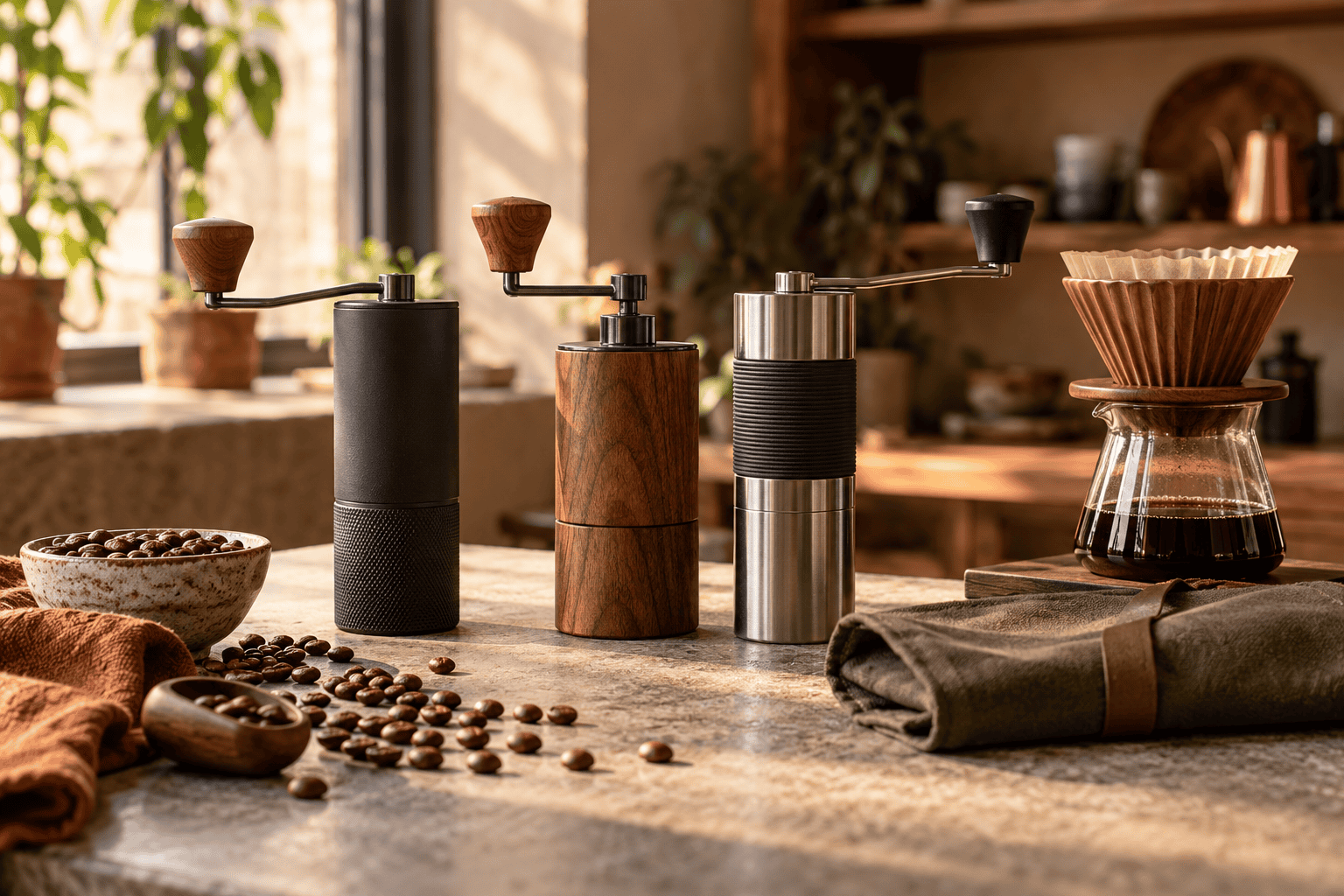
A hand grinder should match the brew method, dose, adjustment, grip, burr access, and luggage plan. Compact size matters only when the grinder remains pleasant to use.
This guide was reviewed against current official product information where a model is discussed. Specifications and packages can change, so verify the exact label or manufacturer page before acting.
Start with brew method and dose
Pour-over, AeroPress, moka pot, French press, and espresso need different grind ranges and adjustment precision. Record the normal coffee dose and how many batches you make. A 20-gram travel grinder may be ideal for one cup and frustrating for two large brews.
Compare current exact models
Timemore currently lists the Chestnut C3 and C3s series with 38-millimeter stainless burrs and a compact body. 1Zpresso lists current Q-series travel grinders. Hario maintains the Mini-Slim Plus as a simpler ceramic-burr reference. Model suffixes matter because capacity and components vary.
Judge adjustment repeatability
Counted clicks are useful only when the zero point and direction are clear. External adjustment is convenient; internal adjustment reduces exposed controls. Record settings in brew notes, but expect different coffee, roast, and age to need changes. Never force burrs tighter while beans are trapped.
Check grip and effort
Body diameter, surface texture, handle length, knob shape, and bearing alignment determine comfort. Smaller grinders can demand a tighter grip. If hand strength is limited, test the loaded grinder within the return period and choose a stable seated posture instead of grinding over a glass brewer.
Plan cleaning without water damage
Most steel and ceramic burr assemblies should be brushed clean and kept dry unless the manual says otherwise. Follow the exact disassembly order and do not lose washers, springs, or calibrated parts. Rice can leave starch and is not a universal cleaner.
Pack it as a system
Confirm whether the handle folds, removes, or stores against the body and whether a case is included. Protect the adjustment dial and burr opening from grit in a bag. Empty beans before travel and check airline or border rules for food and tools.
Match capacity to the brewer
A grinder that fits inside an AeroPress may trade away capacity or grip. Measure the actual packed space and the coffee dose. Grinding two batches is acceptable for occasional travel but can make a daily small-kitchen routine feel slow.
Make the buying choice
Choose the Timemore C3 series when its capacity and adjustment range suit everyday filter coffee, a current 1Zpresso Q model when travel size and finer adjustment justify it, or Hario Mini-Slim Plus for a simpler entry point. Verify official details, then compare exact paid listings. Availability remains API-unverified.
Quick checklist
- Name the main brew method.
- Match hopper capacity to dose.
- Compare repeatable adjustment.
- Test grip and loaded effort.
- Follow dry-cleaning instructions.
- Protect burrs and dial during travel.
Why these checkpoints matter
- Name the main brew method. This defines the starting condition and prevents the rest of the process from resting on an assumption.
- Match hopper capacity to dose. This narrows the choice to evidence you can verify on the exact label, model, or scene.
- Compare repeatable adjustment. This checkpoint reduces avoidable risk before another variable is introduced.
- Test grip and loaded effort. This keeps the routine compatible with the person, product, material, or equipment involved.
- Follow dry-cleaning instructions. This creates a repeatable step instead of relying on memory or marketing language.
- Protect burrs and dial during travel. This final review catches changes in condition, availability, or instructions before the next use.
Common questions
Can one hand grinder do espresso and French press?
Some claim a wide range, but espresso demands fine, repeatable adjustment and more effort. Verify the exact model.
Should I wash grinder burrs?
Only if the manual permits it. Many burr assemblies should stay dry and be brushed clean.
Are more clicks always better?
No. Useful range, burr alignment, repeatability, and clarity matter more than a large number alone.
Official product references
Compare current Amazon listings
Timemore Chestnut C3S grinder
Compare the exact model, dimensions, package contents, seller, current price, and availability.
1Zpresso Q Air grinder
Compare the exact model, dimensions, package contents, seller, current price, and availability.
Hario Mini-Slim Plus grinder
Compare the exact model, dimensions, package contents, seller, current price, and availability.
Keep the decision useful
Write down the exact model, label, starting condition, and result. Change one variable at a time and return to the official instructions when anything is unclear. A short record makes the next decision easier and keeps an isolated result from becoming a rule that does not fit a different product, person, material, or environment.
Review the information again before repeating the process. Stop when comfort, safety, condition, or the manufacturer’s instructions provide a reason to stop. A useful routine stays simple because every step answers a real question.
For the next attempt, note what improved, what remained uncertain, and what should stay unchanged. This final check reduces guesswork and helps small problems become visible before they turn into repeated mistakes.
Keep the original instructions, model information, and observations together. Before repeating the process, confirm that the product, setting, environment, and intended result are still the same.
Use the result as one observation rather than a promise. Conditions change, and the safest next step is the one supported by the current label, manual, evidence, and the limits you can verify.
Use the result as one observation rather than a promise. Conditions change, and the safest next step is the one supported by the current label, manual, evidence, and the limits you can verify.
Use the result as one observation rather than a promise. Conditions change, and the safest next step is the one supported by the current label, manual, evidence, and the limits you can verify.
Use the result as one observation rather than a promise. Conditions change, and the safest next step is the one supported by the current label, manual, evidence, and the limits you can verify.
Use the result as one observation rather than a promise. Conditions change, and the safest next step is the one supported by the current label, manual, evidence, and the limits you can verify.
Use the result as one observation rather than a promise. Conditions change, and the safest next step is the one supported by the current label, manual, evidence, and the limits you can verify.