
Reviewed and updated: October 23, 2026
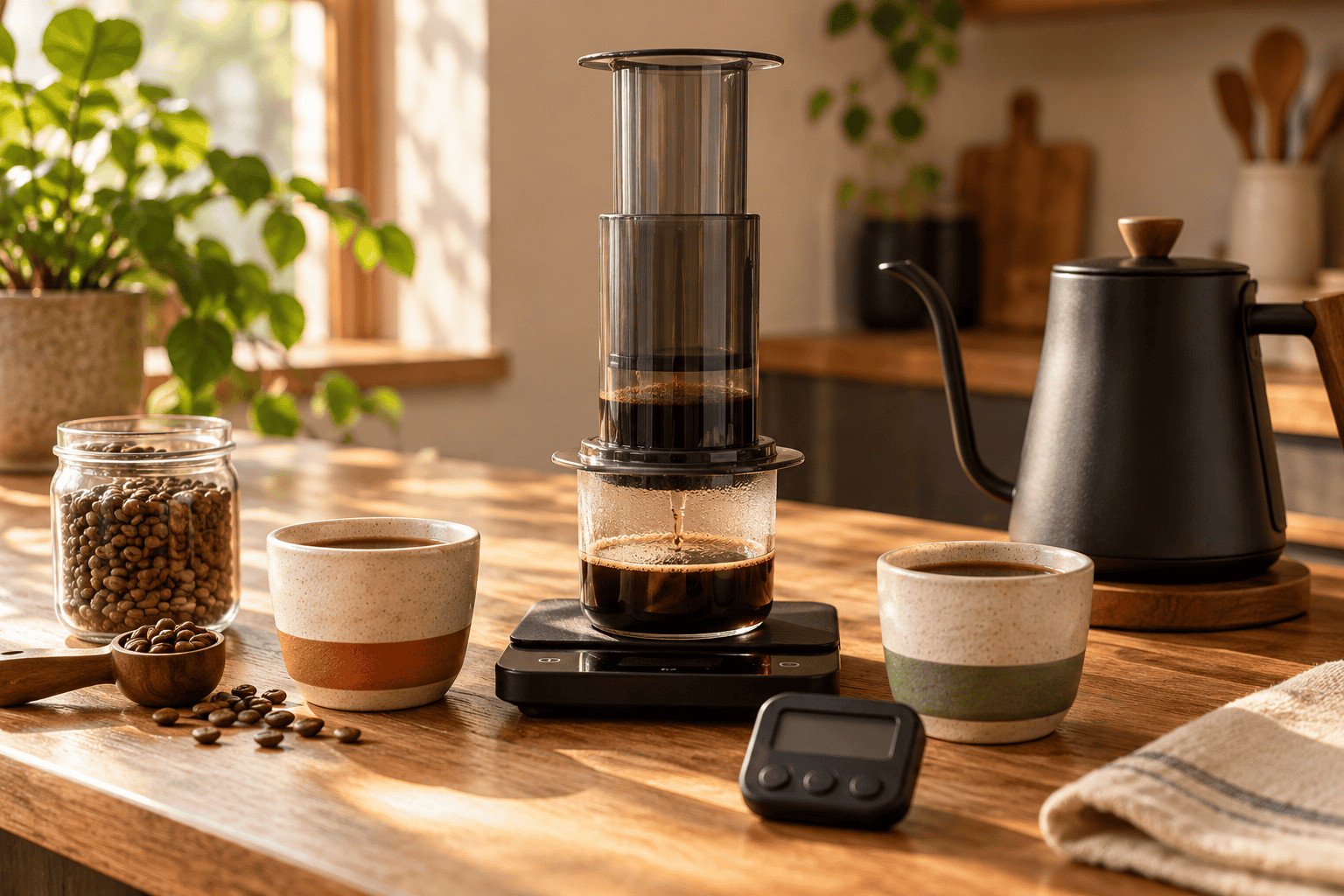
Dialing in an AeroPress-style brewer is easier when one variable changes at a time. Fix the dose and water first, then adjust grind, time, temperature, or agitation with notes you can repeat.
This guide was reviewed against current official product information where a model is discussed. Specifications and packages can change, so verify the exact label or manufacturer page before acting.
Start with a written baseline
Record coffee name, roast date, dose, water amount, grinder setting, water temperature, steep time, agitation, filter, and final dilution. Use a recipe from the brewer or roaster as the first controlled attempt. A baseline is not a universal ideal; it is a repeatable point from which one purposeful change becomes understandable. Make the decision from the real routine rather than a feature list. Check the current instructions, practice the step in a controlled setting, and change one variable at a time. That approach makes results easier to judge and helps prevent an attractive shortcut from becoming a repeated mistake.
Use a scale for dose and water
Scoops and chamber markings are convenient but less useful for controlled comparison. Weigh coffee and water with a suitable scale, then keep the ratio constant for several brews. If the cup is too strong or weak, change dilution after brewing before redesigning grind and time at the same moment. A useful comparison separates what can be verified from what is merely advertised. Record the model, material, setting, or method you actually used, then review the result before repeating it. Small notes are more dependable than memory when conditions change from one session to the next.
Adjust grind in small steps
A finer grind generally increases extraction and resistance, while a coarser grind tends to reduce them, but coffee, grinder, filter, and technique interact. Move only a small number of clicks or one marked step. Purge retained grounds if the grinder requires it, and write down the actual setting. Keep the process simple enough to repeat. Prepare the workspace first, follow the relevant maker or safety directions, and stop when something looks, smells, sounds, or feels wrong. A careful routine usually produces a better result than adding more steps without a clear purpose.
Control water temperature
Use a repeatable temperature appropriate to the coffee and recipe. Darker roasts may become harsh with an unnecessarily hot method, while a light roast may need more extraction energy. Measure rather than guessing from kettle sound, and preheat consistently if that is part of the routine. Avoid unsafe handling of near-boiling water. Make the decision from the real routine rather than a feature list. Check the current instructions, practice the step in a controlled setting, and change one variable at a time. That approach makes results easier to judge and helps prevent an attractive shortcut from becoming a repeated mistake.
Standardize agitation
Stirring, swirling, and pouring turbulence change extraction. Pick one motion, tool, count, and timing. More agitation is not automatically better and can increase bitterness or clogging. If the brewer begins to hiss, leak, or resist abnormally, check assembly and grind rather than forcing the press with excessive body weight. A useful comparison separates what can be verified from what is merely advertised. Record the model, material, setting, or method you actually used, then review the result before repeating it. Small notes are more dependable than memory when conditions change from one session to the next.
Treat press time as feedback
Press gently and consistently while timing the full contact period. A very fast plunge may suggest a coarse grind or channel, while extreme resistance may point to a fine grind, excess agitation, or filter issue. Stop if the brewer becomes unstable. Taste should guide the final change, not pressure alone. Keep the process simple enough to repeat. Prepare the workspace first, follow the relevant maker or safety directions, and stop when something looks, smells, sounds, or feels wrong. A careful routine usually produces a better result than adding more steps without a clear purpose.
Taste after the cup cools
A very hot cup hides sweetness and can exaggerate or conceal flaws. Taste at several temperatures and describe specific impressions: sour and thin, dry and bitter, hollow, sweet, or balanced. Pair the note with the recipe. Simple language tied to variables is more useful than an elaborate score with no brewing record. Make the decision from the real routine rather than a feature list. Check the current instructions, practice the step in a controlled setting, and change one variable at a time. That approach makes results easier to judge and helps prevent an attractive shortcut from becoming a repeated mistake.
Change one variable for the next cup
If the brew is sour and weak, try a slightly finer grind or longer contact time, not both. If it is bitter and drying, move coarser or shorten time. Keep dose, water, and agitation fixed during the test. Stop after two or three cups rather than wasting coffee through fatigue and palate overload. A useful comparison separates what can be verified from what is merely advertised. Record the model, material, setting, or method you actually used, then review the result before repeating it. Small notes are more dependable than memory when conditions change from one session to the next.
Save a recipe range, not one magic number
Beans change as they age and grinders shift with cleaning, humidity, and burr temperature. Record a useful starting range for light, medium, and dark coffees, then make a small adjustment when needed. The goal is a quick daily path to a satisfying cup, not permanent settings that ignore the coffee. Keep the process simple enough to repeat. Prepare the workspace first, follow the relevant maker or safety directions, and stop when something looks, smells, sounds, or feels wrong. A careful routine usually produces a better result than adding more steps without a clear purpose.
Quick checklist
- Write the complete baseline recipe.
- Weigh coffee and water.
- Adjust one variable at a time.
- Standardize agitation and press.
- Taste again as the cup cools.
- Save a useful starting range.
Why these checkpoints matter
- Write the complete baseline recipe. This defines the starting condition and prevents the rest of the process from resting on an assumption.
- Weigh coffee and water. This narrows the choice to evidence you can verify on the exact label, model, or scene.
- Adjust one variable at a time. This checkpoint reduces avoidable risk before another variable is introduced.
- Standardize agitation and press. This keeps the routine compatible with the person, product, material, or equipment involved.
- Taste again as the cup cools. This creates a repeatable step instead of relying on memory or marketing language.
- Save a useful starting range. This final review catches changes in condition, availability, or instructions before the next use.
Common questions
Which variable should I change first?
After fixing dose and water, grind is often the clearest first adjustment.
Should I press as hard as possible?
No. Use steady gentle pressure and stop if the brewer becomes unstable or unusually resistant.
How many test cups should I brew?
Two or three controlled cups are usually more useful than many rushed changes in one session.