
Reviewed and updated: November 10, 2026
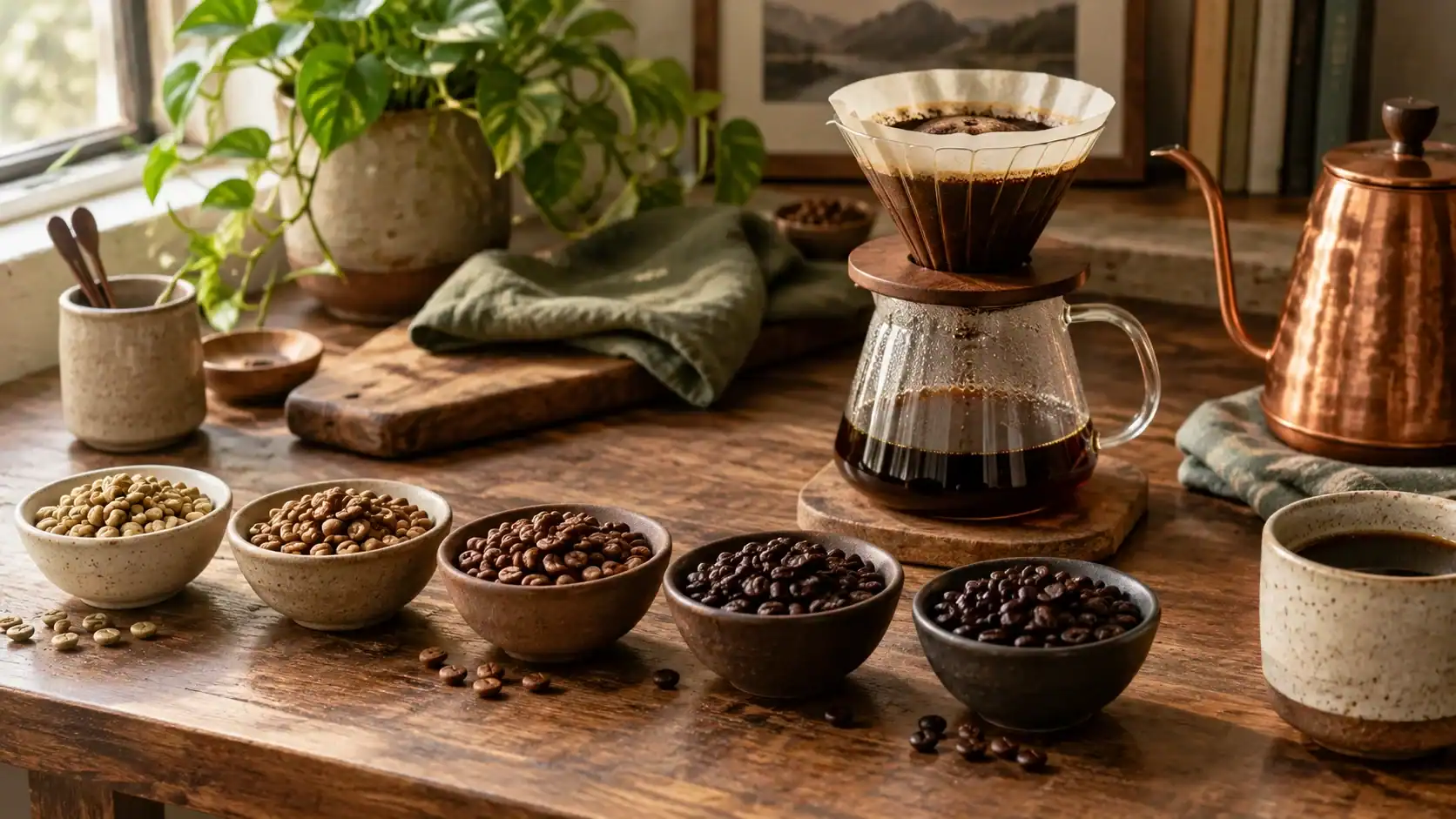
We recommend Starbucks Pike Place Roast whole bean as the starting point if you want a familiar medium roast for everyday brewed coffee. Choose Veranda Blend when you prefer a lighter roast, or Espresso Roast when a darker profile is part of what you enjoy, especially in espresso and milk drinks. The main compromise with Pike Place is that its middle position may be less appealing if you already know you want one of those extremes.
The useful decision is which bag suits the coffee you make at home. These three coffees are different roast choices, rather than a ranking from basic to premium. Buying the darkest one will not automatically make your drink better, and choosing whole bean only helps if you have a way to grind it appropriately.
Pike Place: our medium-roast starting point
Its maker describes cocoa and praline notes; it is the middle choice here, rather than the lightest or darkest roast.
Pike Place is a Latin American blend that Starbucks describes with cocoa and rich praline notes. We would choose it when you want a medium-roast direction without making a light or dark roast the defining feature of your coffee. Those tasting notes describe the intended flavor profile; they do not mean the bag contains cocoa powder or praline flavoring.
That makes it a sensible first bag if you drink a regular mug of filter coffee and are unsure where to start within Starbucks’ range. You can then decide whether you want to move toward Veranda’s lighter roast or Espresso Roast’s darker character. You do not need to buy all three to make that decision if you already have a clear preference.
We would be more cautious about choosing Pike Place as a gift for someone who specifically asks for a light roast or a dark espresso blend. A familiar brand name does not erase that preference. For your own coffee, the medium-roast position is a reason to consider it, rather than a promise that everyone will find it equally balanced.
Veranda: the lighter-roast alternative
Starbucks describes toasted malt and milk chocolate notes; choose it for that profile rather than expecting the darker character of Espresso Roast.
Veranda Blend is Starbucks Blonde Roast, described as light roasted with toasted malt and milk chocolate notes. It gives you a different starting point from Pike Place if darker roast character is what you tend to dislike. We would choose it on that basis, rather than assuming that the word Blonde means weak coffee or a particular caffeine level.
Starbucks also describes Veranda as a blend that mixes well with milk. That is useful if you want a lighter-roast direction but still add milk to your usual mug. You do not have to choose Espresso Roast merely because your coffee is not served black. The amount and type of milk you add remain part of the drink you prefer.
The compromise is straightforward: if you look forward to a pronounced dark-roast profile, Veranda is pointing in the other direction. Its lighter positioning is not a defect to correct by buying a larger bag or a different machine. Choose it when that difference sounds appealing, and stay with a darker blend when that is the flavor direction you want.
Espresso Roast: a deliberate darker choice
We would choose Espresso Roast when you want Starbucks’ dark-roast direction and plan to grind for espresso or another suitable brewer. Its name does not make whole beans ready to put into a capsule machine.
Espresso Roast is a dark-roasted blend from Asia Pacific and Latin America, with molasses and caramel notes in Starbucks’ description. We would choose it when you want that darker profile in the coffee itself. Starbucks uses the blend as the basis of its espresso drinks, which gives the name a concrete connection to its café menu.
The bag still contains whole beans. To make espresso, you need an appropriate machine and a grinder capable of preparing coffee for it. Buying this blend does not recreate a café drink on its own, and the bag is not a refill for Nespresso capsules. If your machine uses a bean hopper, follow its instructions about suitable beans rather than relying on the word Espresso.
You can also consider the roast for a different brewer when a dark profile is what you enjoy and you can grind for that method. Espresso is not a restriction that makes the beans unusable outside an espresso machine. Conversely, it is not a reason to reject Pike Place or Veranda if you prefer their roast direction and have a suitable way to prepare them.
Choose the format that fits your equipment
Whole bean gives you control over the grind, which matters if you move between a French press, pour-over and an espresso machine. That flexibility brings an extra appliance or a manual grinding step into your morning. If your current grinder cannot handle the method you use, buying whole bean does not solve that limitation.
Ground coffee can be the more convenient purchase if you do not want that work. A search for Pike Place can return ground coffee, pods and other products alongside whole beans. The right blend in the wrong format is still the wrong order for your setup.
If grinding is the missing part of your whole-bean setup, our OXO burr grinder guide explains its fit for brewed coffee and the limits of treating it as an espresso purchase. That equipment decision should support the coffee you want to make, rather than becoming an automatic extra purchase with every bag.
Buy a sensible amount of the blend you prefer
We would start with a package you can finish comfortably, especially when changing roast direction. A larger bag commits you to more of the same coffee before you know whether it suits you. Compare the selected bag’s weight and format when checking value, since a multipack and a single bag are not directly comparable from their headline prices.
Keep the bag’s date information and storage instructions in view when ordering. A familiar roast name does not tell you when a particular seller’s package was roasted or packed. You also do not need to infer freshness from the appearance of beans in a promotional photograph. The actual package is the relevant purchase.
Our recommendation
Choose Pike Place for a medium-roast starting point, Veranda for a lighter direction, and Espresso Roast when you want the darker profile. We would make that choice around the flavor and format you already enjoy, then buy a manageable amount before committing to a larger package.
As an Amazon Associate I earn from qualifying purchases.