
Reviewed and updated: October 30, 2026
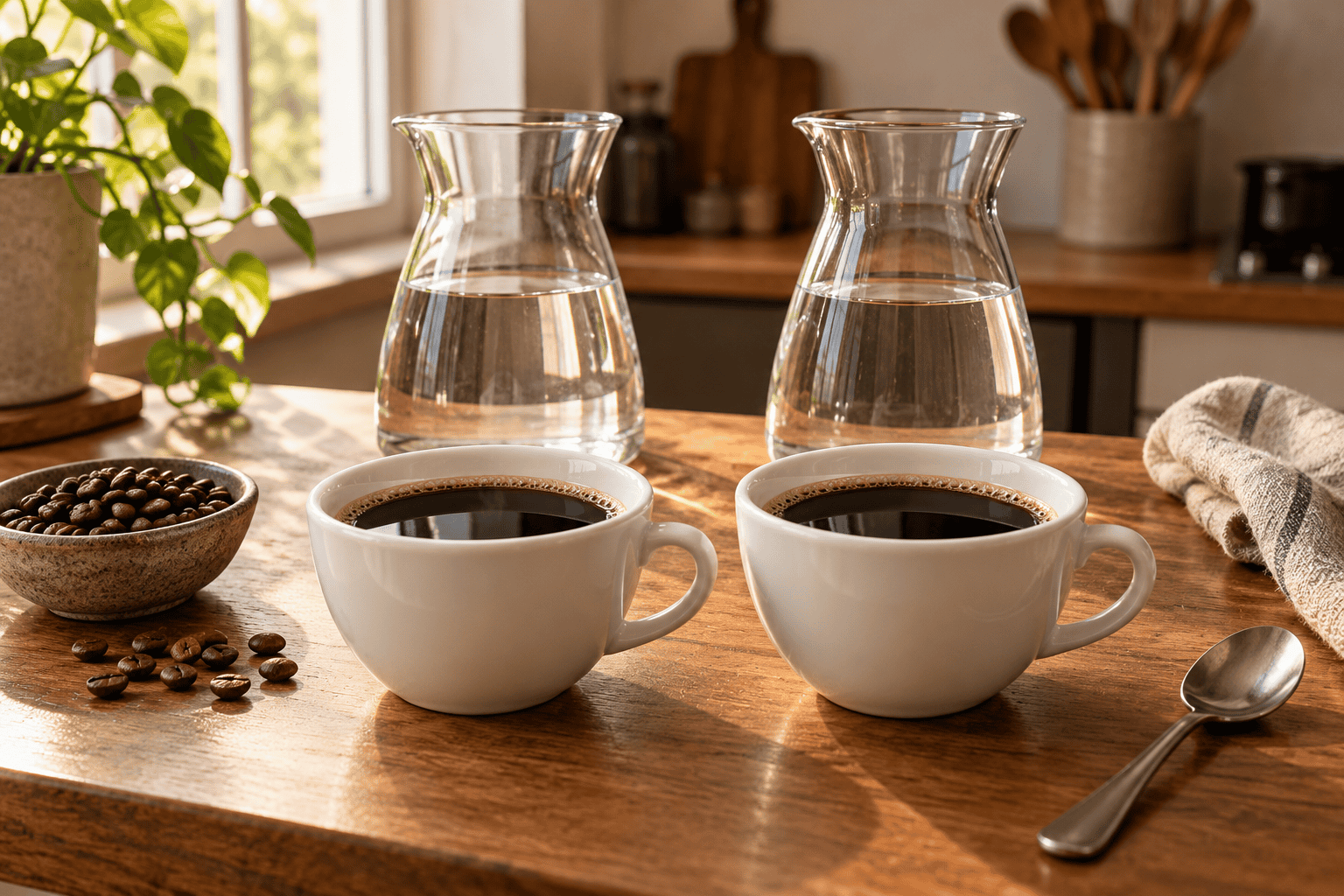
When the same bag of coffee tastes different from one kitchen to another, the water may be part of the explanation. A useful comparison does not require a laboratory kit or an expensive filter. Brew the same coffee with two suitable drinking waters while keeping the recipe and equipment as similar as possible, then taste the cups side by side. You are looking for a repeatable preference, not a universal winning water.
The test works best as a small, practical experiment. Change the water and hold the other choices steady. If you also change the grind, dose, filter, and pouring style, the result becomes difficult to interpret. Use your normal safe brewing routine and stop before the exercise turns into a reason to waste half a bag.
Start with two waters you can actually use
Choose waters that are safe to drink and appropriate for the brewing equipment. A normal tap supply and a suitable filtered version can be a useful pair. If using bottled water, read the label and choose something you can obtain consistently. Do not use untreated outdoor water, nonpotable water, scented products, or water from an uncertain container. Distilled water and highly mineralized waters are not automatic improvements; equipment manufacturers may specify restrictions, especially for espresso machines. For this comparison, a manual brewer you already understand keeps the setup simple. Follow any local drinking-water advice and appliance instructions before considering taste.
Taste the plain water first
Pour a little of each water into identical clean glasses at a similar temperature. Check for an obvious odor or flavor that might appear in the coffee. A strong chlorine-like impression, stale bottle smell, or detergent residue deserves attention before brewing. Rinse glasses properly and avoid comparing one chilled glass with one warm glass, because temperature affects perception. Write a few ordinary words such as fresh, flat, metallic, or neutral rather than trying to diagnose mineral chemistry by taste. A sensory impression is useful for choosing what you enjoy, but it does not establish whether a water supply is safe or identify its exact composition.
Set one recipe before heating
Use a familiar coffee dose, water amount, grind setting, and brew method. Weigh both batches if you have a scale; otherwise use the most repeatable measuring approach available. Grind coffee from the same bag at the same setting and prepare the batches close together. Do not choose a completely unfamiliar recipe just for the test. The guide to coffee-to-water ratio can help you establish a baseline first. Once the recipe is set, write it down and keep it unchanged for both waters. Matching the procedure is more important than chasing a supposedly ideal number borrowed from another coffee.
Keep the equipment and filters consistent
Use the same brewer and server for both batches, cleaning and rinsing them between uses. Alternatively, use two genuinely matching sets if you already have them. Use the same filter type and rinse it with the water assigned to that batch. Keep mugs, spoons, and carafes free from detergent and old coffee oil. Preheat consistently and take normal precautions around hot water. If one brew sits in a cold vessel while the other goes into a hot vessel, their temperatures may drift apart before tasting. For a practical preparation routine, see preheating coffee equipment. Keep that routine equal across the comparison.
Brew without chasing the result midstream
Follow the chosen method as closely as you can. Keep pouring height, agitation, and timing similar, but do not become so focused on a stopwatch that you handle hot equipment carelessly. Note any obvious difference such as a stalled filter or spilled water. If one batch goes wrong, remake that small batch rather than interpreting an accident as a water effect. Do not alter the grind after tasting the first cup. That would turn the second cup into a different recipe. Let the first result be imperfect if necessary; a second controlled comparison can answer a clearer question than several changes made during one brew.
Label cups in a way that reduces expectation
Ask another adult to assign simple letters to the cups if you want a less biased comparison. Keep the water identities written somewhere so nothing gets confused later. Avoid giving one cup a persuasive name such as 'premium' and the other a dismissive name such as 'ordinary.' Use identical cups and similar serving amounts. If you are working alone, you can still take notes honestly; just recognize that knowing the source can influence preference. The aim is a useful household decision rather than a formal scientific trial. Keep hot drinks away from children and do not turn a tasting into a speed-drinking challenge.
Compare as the coffee cools
Begin when both cups are comfortable to sip, then compare again a few minutes later. Notice aroma, sweetness, bitterness, acidity, body, and the impression after swallowing. Describe what you taste without assuming that stronger is better. One water may make a coffee feel brighter, while another may seem rounder or flatter. Use small sips and take breaks. Do not force yourself to finish both servings, particularly if you limit caffeine. A preference that appears only when one cup is much hotter may be a temperature preference. Bring the cups closer in temperature before drawing a conclusion about the water.
Write down a preference you could repeat
Use a simple note: coffee, recipe, water A, water B, brew problems, and preferred cup when warm and cooler. A sentence such as 'A tasted sweeter as it cooled; B had a drying finish' is more useful than a complicated score you will never use again. Repeat on another day before changing the household water routine. Use the same bag if possible, allowing for normal changes as coffee ages. If the preference reverses, examine the brewing procedure and freshness first. A small home test can guide taste choices, but it cannot prove a precise mineral target or establish that one water is best for every roast.
Consider maintenance and everyday practicality
Taste is only one part of choosing brew water. Follow your brewer's water and descaling guidance, keep filter cartridges on their specified replacement schedule, and store drinking water in clean suitable containers. Do not extend a cartridge's life because the coffee still tastes acceptable. Compare the ongoing effort, packaging, and cost of the options you tested. A subtle preference may not justify an inconvenient daily process. If the equipment requires a particular water treatment, respect that requirement even when another cup tastes appealing. Avoid adding home-mixed mineral concentrates unless you understand the recipe, measurements, food suitability, and equipment implications.
Make one modest change and check it again
If one water consistently tastes better with your usual coffee and suits the equipment, use it for a week and observe the result. Keep the recipe stable during that period. If neither cup stands out, retain the simpler routine and spend your attention on fresh coffee, cleanliness, and consistent brewing. You have still learned something useful: the water difference you tested may not matter enough for your preferences. A good coffee experiment ends with a clearer choice and a repeatable cup. It does not need to produce a dramatic discovery, a new purchase, or a complicated set of rules for every morning.