
Reviewed and updated: November 10, 2026
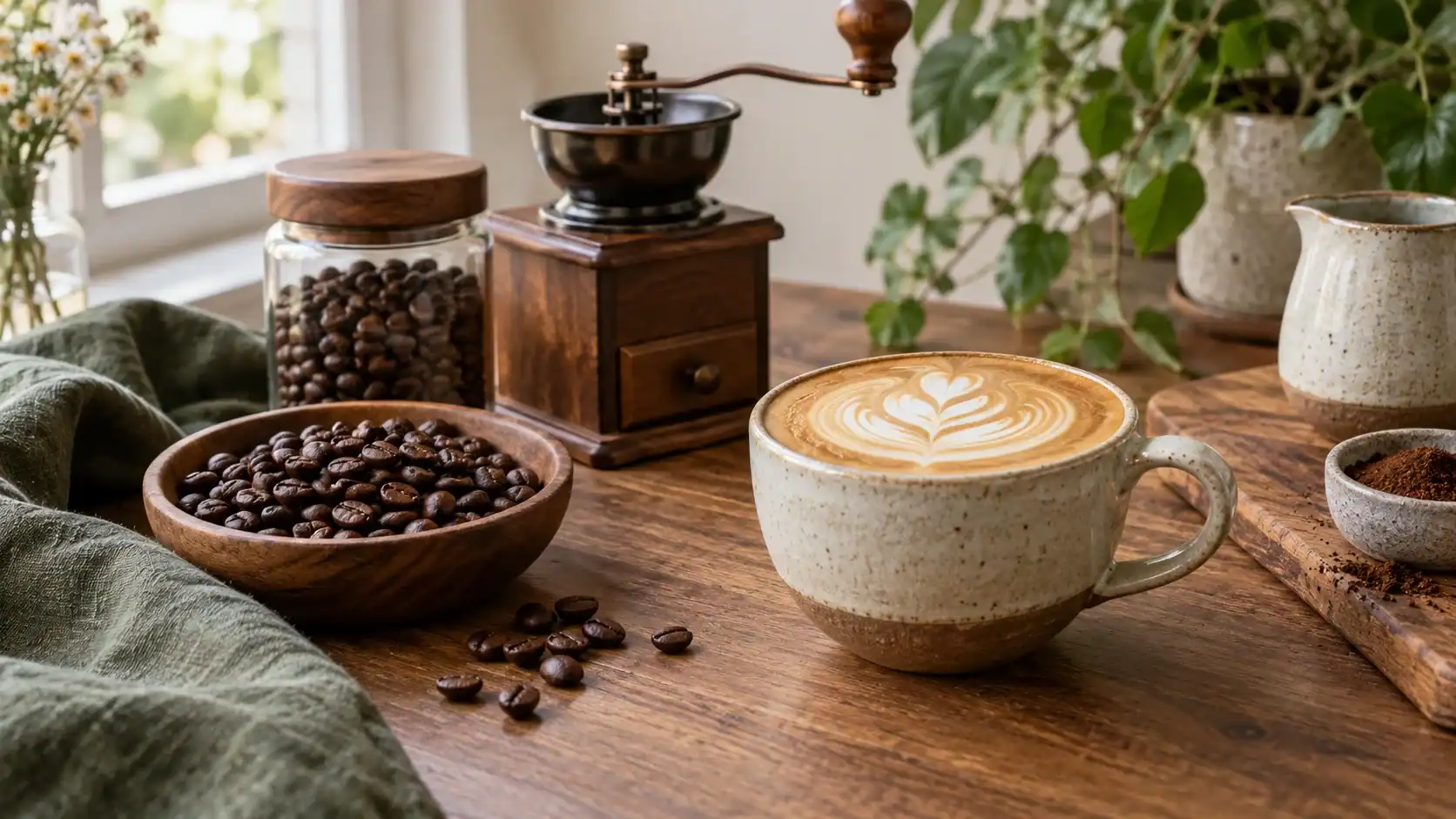
We recommend Lavazza Super Crema whole beans for lattes when you want a medium-roast espresso foundation with a nutty, brown-sugar direction. We would choose Starbucks Espresso Roast instead if you prefer a darker, molasses-and-caramel profile. Super Crema’s main compromise is its Arabica-and-Robusta blend: that is a deliberate part of the coffee, so choose another option if an all-Arabica bag is a priority.
The best choice depends on how much coffee character you want through the milk. A small latte and a large, milk-heavy mug ask different things from the same espresso. Start with a flavor direction you like, then make sure the bean format and your equipment fit. A bag labeled espresso can be a useful recommendation, but the word alone does not tell you whether you will enjoy it in your drink.
Super Crema is our starting point for a nutty latte
It contains Arabica and Robusta; it is not the choice if you specifically want an all-Arabica blend.
Lavazza describes Super Crema with roasted-hazelnut and brown-sugar notes and identifies the current whole-bean coffee as a medium roast. We would choose that direction when you want a familiar, rounded flavor reference alongside milk without making a very dark roast the starting point. The notes describe the coffee’s intended character, rather than added hazelnut flavoring or a promise of sweetness without sugar.
The blend contains both Arabica and Robusta. That composition is a concrete difference from Starbucks Espresso Roast, which Starbucks identifies as Arabica. We would not decide between them on a claim that one species automatically makes a better latte. Choose Super Crema because the blend’s described flavor direction suits you; choose an all-Arabica alternative when that composition is specifically what you want to buy.
Lavazza presents this whole-bean product for espresso preparation. That makes it a relevant candidate for a home espresso setup, but it does not guarantee a particular crema layer or extraction result from your machine. Those outcomes also depend on the beans’ condition, your grind and the way the machine is used. We recommend the coffee without promising a visual result as proof of quality.
Espresso Roast is the darker alternative
Starbucks Espresso Roast takes the decision toward a dark roast with molasses and caramel notes. We would choose it when that more roasted flavor direction is part of what you enjoy in a latte. It is especially relevant if you want coffee that remains a deliberate part of the drink rather than choosing primarily around the milk’s sweetness and texture.
We would choose Espresso Roast when you enjoy a dark roast with molasses and caramel notes. Buy the whole-bean coffee for a bean-fed espresso setup; similarly named capsules and ground packages are different formats.
Dark does not automatically mean stronger in every sense. Roast level is not a reliable shortcut for predicting the caffeine in your finished latte, and it cannot compensate for using too little espresso in a large mug. Buy Espresso Roast because you prefer the described flavor, then size the drink around a sensible espresso-and-milk balance for your own taste.
The compromise is that a dark molasses-led profile may be exactly what you dislike in some café drinks. If you want to move away from that impression, we would try Super Crema’s medium-roast, nutty direction rather than assume that an espresso-labeled dark roast is mandatory. You can make a latte from several roast styles; the useful distinction is which one you want to taste after adding milk.
Hair Bender offers a citrus-and-chocolate route
Stumptown Hair Bender is our alternative when you want citrus and dark chocolate rather than a mainly nutty or dark molasses direction. Stumptown also lists raisin among its notes and identifies it as the blend used for its espresso. Those references make it worth considering for a more fruit-led latte, without implying that your milk drink will reproduce each note individually.
Stumptown lists it for French press, pour-over and espresso, making it useful if one bag needs to serve several brewers.
We would choose Hair Bender when the coffee’s fruit dimension is something you want to notice, particularly in a smaller milk drink. If you normally want the coffee to settle into a caramel-like background, Starbucks Espresso Roast is the more direct choice. Super Crema remains our starting recommendation when nutty and brown-sugar notes sound most appealing.
Milk can soften or change how those differences come across. You do not need to buy all three blends to investigate that: choose the one whose description resembles the latte you want, and buy a manageable amount first. A more expensive or more unusual coffee is not automatically a more useful purchase if its defining character disappears in the large milk drink you actually make.
Match the beans to your espresso equipment
These recommendations are for whole-bean coffee, not capsules. A Nespresso or Keurig machine does not accept loose whole beans simply because the bag says espresso. If you are choosing a capsule setup instead, our Nespresso versus Keurig comparison explains the espresso, coffee-mug and milk-setup decisions before you buy coffee in the wrong format.
For a bean-fed superautomatic machine, follow its guidance on suitable beans and hopper care. Do not assume every flavored or coated product is suitable because its package uses the same roast description. A blend’s naturally described hazelnut or caramel note is different from a coffee explicitly sold with added flavoring, and the machine’s instructions remain the authority on what belongs in its grinder.
A conventional espresso machine also needs a grinder capable of the adjustment its basket requires, unless you buy a suitable ground format. Whole beans give you control only when the grinder can provide it. If you have a general coffee grinder designed primarily for filter brewing, check its espresso limitations before buying several bags around an adjustment range it cannot supply.
Buy for the latte you make most often
If your usual latte is a large mug of milk, we would focus first on a coffee direction you want to remain recognizable in that drink. Darker Espresso Roast may suit that preference, while Super Crema offers a medium-roast alternative. Adding extra milk to a shot changes the balance more directly than a list of tasting notes can predict, so the size of your daily drink belongs in the buying decision.
Package size matters as well. The current Lavazza US product page includes a 10.5-ounce whole-bean option; marketplace results can show different sizes and formats. Start with a quantity you can use steadily while adjusting your setup. A bulk bag commits you to a lot of unfamiliar coffee, especially if you only make an occasional weekend latte.
Our recommendation is Super Crema for a nutty medium-roast foundation, Espresso Roast for dark molasses and caramel, or Hair Bender for citrus with dark chocolate. Choose the named whole-bean coffee in an amount that suits your brewing habits.
As an Amazon Associate I earn from qualifying purchases.